19 August 2009

Happy Canon Day!

Twice a year, in the fall and winter before the trade shows, Canon refreshes its product line. These are of course happy times for Canonistas, and sad times too, since their high expectations can rarely be satisfied.

But today Canon announced six new compact cameras, all on their high end, and there is much to be happy about. I wrote a lot last month about the megapixel race that has eroded compact camera image quality (IQ) and the decline of enthusiast-grade compacts. I also mentioned the Panasonic LX3, with its larger-than-average imaging sensor and impressive IQ, which has had enthusiasts all aflutter. In fact, even though expensive ($530), it has been extremely scarce, due to demand and also, it seems, supply issues. And then Olympus introduced its Pen E-P1, an interchangeable lens compact with a DSLR-sized sensor, which enthusiasts are wild about. Everyone has been expecting and hoping for a response from other makers. That is, more large-sensor compacts that put image quality first.

Canon's G10, its top compact, has been no slouch. It actually has a larger sensor than the Panasonic LX3, but packs in a lot more pixels, too. Even so, I think image quality is comparably good. Neither are DSLR-class.

But Canon has done something today that some pundits said they never would. Responding no doubt to the LX3, they've introduced not one but two new compact cameras with large 1/1.7" sensors like that found in the G10, but with almost a third fewer pixels (10mp vs. 14.7mp). This is a tacit act of repentance by Canon for their megapixel excesses.

The first camera is a G10 replacement, the Canon G11. It differs from its predecessor mainly in its lower pixel count and new twist-out screen. The less-dense sensor, paired with the fast Digic IV processor, is being marketed as a new "High Sensitivity System." Whatever. The camera is a laudable step forward. It does not have the LX3's 24mm wide lens, but it's 28mm wide end is fine and it has a much longer and more useful long end, 140mm vs. the LX3's pathetic 60mm. Overall, I think the G11 will beat it handily.

The second large-sensor compact is a real surprise. Years ago Canon retired its enthusiast-grade Compact S series, though the S70 from 2004 is still considered a very fine camera. Today they introduced a new Canon S90, a worthy successor, with same 10mp 1/1.7" sensor as the G11, a very fast (f/2) 28-105mm lens, RAW support, and a very intriguing lens control ring, in a small and pocketable card-camera format. I absolutely love it, but could wish it were cheaper ($430 list). But enthusiast-grade cameras are always pricey.


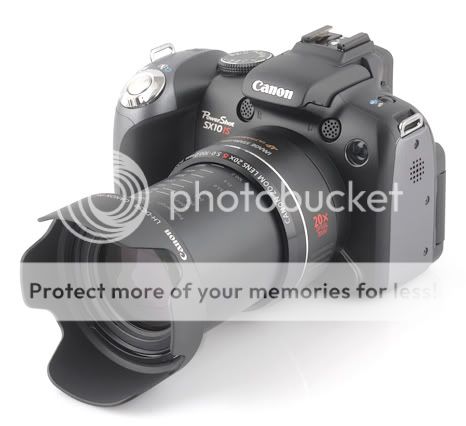
Canon also upgraded two of their superzooms, the SX10 IS and SX110 IS, to the SX20 IS and SX120 IS respectively. Mostly just megapixel bumps (boo), but the SX20 also got 720p HD video (yeah). The best news here is this should drive down the price of the SX110 (review) to bargain levels. It will certainly be the best compact superzoom for the money, and with its full manual controls, replaces nicely the high-end A series cameras which Canon killed. There may be an SX110 somewhere in my future.

I'll pass over the two new Digital ELPH models (for all, see Canon's website), but they are good upgrades. For myself, the three main things I want to see in new compacts are better image quality, wider and faster lenses, and bigger, better and higher-res screens. Across these various models, Canon delivered on all three. Now I'm really looking forward to the next Canon Day, probably Sept. 1, when its new DSLRs are announced. If rumor holds, the new 60D/7D will have a full-frame sensor and be priced to compete with the new Nikon D300s (ca. $1800, body only). Stay tuned.

16 August 2009

DSLRs: Less Is More

I've posted before about how more megapixels is a bad thing in compact cameras. I pointed out that the Fujifilm F30/F31fd cameras, with a modest 6.3mp, produced better photos than brand new 12mp compacts. It comes down to a fact of physics that smaller pixel sites packed closer together on any given size of sensor will gather less light and generate more noise than fewer, larger pixels. Past a certain point, cramming more pixels on a sensor is just a cynical marketing gimmick.

I've been disappointed to read that manufacturers have now crossed the megapixel quality line in DSLRs with small-format sensors, a format called DX by Nikon and APS-C by Canon. These sensors are used widely in entry- and mid-level cameras. They are much smaller than the full-frame 35mm sensors in the top-of-the-line DSLRs, though MUCH larger than compact camera sensors.


The blue (1.5x) and red (1.6x) rectangles represent DX/APS-C sensors respectively. Most compact camera sensors are smaller than even the innermost 1/3" sensor size.

DX/APS-C sensors have to this point produced superb, low-noise images even at ISOs as high as 1600. This allows, for example, the effective use of even entry-level DSLRs for night photography. Their main disadvantage as compared to larger full-frame sensors has been in megapixel counts, crop factor, and diffraction.

Crop factor is the reduced field of view that smaller sensors offer, which effectively turns that great 24mm wide-angle lens from your film camera into a 40mm normal lens on your DSLR. This is very problematic, and pushes people up to full-frame cameras in itself.

Diffraction means, in practice, that as you reduce your aperture, usually for increased depth of field, the point at which image quality starts to degrade increases as pixel density increases. So you may start to see diffraction at f7.4 on a 15mp APS-C camera, but only at f11 on a 16mp full-frame camera.

I have not read many reviews on Nikon cameras, since I shoot Canon. But I think Nikon is still putting quality imaging first. On Canon APS-C DSLRs, tests show that the latest 15mp models, the entry-level T1i and mid-range 50D, both have slightly poorer image quality than earlier models with 12mp or less, like the XSi and 40D. Dpreview concludes that the "40D stills beats the newer model [50D] in terms of per pixel detail. Despite a 22% increase in vertical and horizontal resolution the extra detail captured by the 50D is marginal." The 12.3mp sensor in Nikon's D90 and several other models beats it, too. It's looking like 12mp is about as high as you can go on DX/APS-C sensor while retaining optimal image quality.

Also, noise levels have really taken a jump, especially when working with RAW images ("digital negatives"). So, again dpreview: "When shooting in RAW the 500D [T1i] actually shows visibly more noise at higher ISOs than its predecessor [XSi]."

Two other problems are, first, as explained above, diffraction has necessarily increased as megapixels have risen. Perhaps more seriously, at these pixel densities it takes really good lenses to resolve images sharply, so that with the T1i, "At least towards the edges of the frame the kit-lenses struggle to resolve all the detail in a scene."

All together, when viewing T1i and XSi images side by side, the differences in quality are very apparent. Our reviewer concludes, "The 'extra quality' you can usually get out of RAW files compared to shooting in JPEG is relatively limited on the 500D [T1i]. One reason for that is the quality of the camera's JPEG engine. It is doing a pretty good job at 'optimizing' the JPEG output when converting the RAW data. However, the 500D's [T1i's] RAW images are also slightly lagging behind some of the competition and surprisingly even the 450D [XSi] in terms of high ISO noise and to a smaller degree in terms of pixel level detail. It's not going to be an issue when checking images at screen size but it's certainly visible up-close."

Canon should be introducing two or more new DSLRs on Tuesday (or Sept. 1; rumors vary). Almost certainly a new 7D to replace the 50D and a downspeced T1 to slot beneath the T1i. I'm now a little less enthusiastic about the T1i and will be interested to see what these new models bring to the table. Very sensibly, rumor has it that the new 7D will not increase in megapixels. I think Canon realizes that they've crammed all the pixels they can on a APS-C sensor without seriously damaging the image quality. Already they've gone a little too far.

For myself, I'm now looking at a refurbished Canon 40D or perhaps a slightly less expensive Canon XSi. There are pros and cons to both, but I'm leaning towards the 40D. It's 10mp are enough for me and it has a much better viewfinder than the XSi. That's important to me. But we'll also see what the new product launch brings.

15 August 2009

Greatest Movies Ever Made

This article by Roger Ebert is certainly worth a look by any movie fan. I personally love Ebert as a critic and rarely find myself disagreeing with him. His comments on the inherent utility of such lists ("propaganda") should be noted, but at the same time, he gives it a thumbs up. Worth a browse for any cinephile. And I guess I need to go watch "The Night of the Hunter."

10 August 2009

Photojournalism: A Death by Inches

Reading about the history of photography lately, it's amazing how many revolutions this art form has gone through in its brief lifetime. Photography in the form we know it, portable and widely used on a variety of subjects, only came into being in the late 1870s. And then it was only after another fifty years that it really started to find its own voice and become the modern medium we all know.

Very important to photography's history is photojournalism. The most important single body of photos from the 19th century are certainly Mathew Brady & Co.'s images of the Civil War. A majority of the most iconic photos of the 20th and 21st centuries, at least among non-photographers, comes out of photojournalism, though a close second place must be awarded to fashion/celebrity portraiture (same thing to me; think Annie Liebovitz). Both those genres of photography have of course flourished because there has been money in them. They produce iconic images because, as staples of mass media, a lot of people see them.

For photojournalism, that is decreasingly the case. The NY Times just published today an article titled, "Lament for a Dying Field: Photojournalism." The story was filed under business, not art, but I see it as the death of an art form.

But only in a certain respect. As a professional art form, photojournalism has been in decline for some time, due to shifts in media. Its heyday directly corresponds to the heyday of its most prominent vehicle, Life magazine in its Henry Luce era, which ran as a weekly from 1936-1972. Its popularity funded ambitious photojournalist projects like those of W. Eugene Smith. Life and its style of photojournalism was basically killed by television.

Photojournalism has ever since been less an independent vehicle of expression than illustration, but demand for it in print media has been sufficient that the talented and determined photojournalist has still been able make a living at it. But with the decline of print media and revenues, as the NYT article describes, photojournalists are in the same dire straits as all other journalists.

Journalism and photojournalism will both survive in different forms, but it seems likely that many fewer people will be doing it professionally. That may especially be the case with photojournalism. My own concern is less for people who have to find new careers (hey, that's life) than for how this will affect the medium of photography and our visual literacy, as well as (with all journalism) the deep coverage of socially significant events and issues.

This will not mean fewer photographs are made and published. Never have more photographs been made and published. I'm not even sure that, in spite of increasing amaturization, fewer brilliant photographs will be published. I think professionals may produce great photos as much through opportunity and volume as by pure artistic talent. Some of even the most significant "professionals" in the history of photography, like Alfred Stieglitz, were not the greatest photographers, while amateurs like Julia Margaret Cameron and Jacques Henri Lartigue produced images of enduring artistry and historical importance.

But with the greater diffusion of photographs across the internet, fewer photos and photographers will enjoy the universal exposure that they once enjoyed when media channels were narrower, and therefore fewer icons will be produced. And I think icons, both iconic artists and iconic works, are necessary for the cultivation of an art. They focus collective attention, produce criticism, and provide the common points of reference needed for literacy.

So all this seems to bode ill for photojournalism, as a career and, perhaps, as an art. But will this also be detrimental to photography in general as an art?

08 August 2009

Two and Null for Cameras

I'm not good at taking my own advice. After ripping at length on the poor image quality of compact cameras, I blew the last of my cash on two of them. One I got and returned, and the other is never coming.

As I mentioned, I did buy a Canon SX10, refurbished. It came with a small blemish on the lens coating, but otherwise was clean. The functionality was very good and the movie mode was great. At $300, for a very good compact superzoom, it did all it promised.

But the image quality was still just "compact" quality, which is not even close to DSLR quality. And the lens was also soft in one corner on the wide end. Given that it was about as big and expensive as a refurbished DSLR, and with image quality as a priority, there was no sense in owning and using an SX10. So I've returned it.

The great virtue of compacts is that they are compact, so I also purchased a Canon SD1100, which is a very small "card compact." I want to have a camera on me all the time, and the SD1100 was quite inexpensive, small and light. Unfortunately, Dell canceled my order, due to unavailability of product. So, two and null.

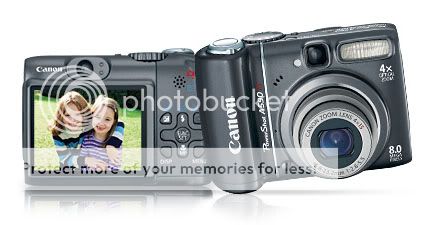
At the same time, Adorama has made available a few more refurbished Canon A590s, which have been discontinued and otherwise dried up in retail channels. It is a popular compact camera with enthusiasts because it is one of the last entry-level compacts Canon (or anyone) has made that offers SLR-type exposure controls (Manual, Aperture priority, Shutter priority, etc.). It also has optical image stabilization and, while plastic, performs to Canon's usual high standards.


And importantly to me, it can use a hacked firmware called CHDK, which gives supported Canon compacts all kinds of amazing capabilities they otherwise lack, such as RAW file support, RGB live histogram, ultra-high shutter speeds, scripted actions, and tons else. It really is off-the-charts crazy great stuff for camera geeks, and I have to have a least one camera that can run it. For less than a Benjamin, this SD590 will do the job just fine.

Otherwise, I'm just saving up for DSLR gear. I have the use of an old Canon Rebel XT from work, but will probably replace that with a refurbished Canon Rebel XSi in the not too distant future. Next stop beyond that will be a Rebel T1i. But in Life After Dissertation, I'll be setting my sights on a professional camera and lens, namely a Canon 5D Mark II with the EF 24-105mm f/4L IS zoom.

Hey, let me dream.

04 August 2009

Nikon D300s: Another Great DSLR Hybrid

I shot a couple of movies on our new Canon SX10 last weekend. They look great but the Youtube conversions came out awful. But while I'm trying to figure that out, I wanted to share a movie made with Nikon's new DSLR, the D300s. It is priced about $700 less than that other great DSLR hybrid I've blogged on, the Canon 5D Mark II, though not entirely in the same league. It has a smaller sensor, and just 12mp vs. 21mp, but the digital video quality is again impressive.

29 July 2009

Nikonians and Canonistas (Part 2)

I own the first consumer-model autofocus SLR produced by Nikon in 1986, the N2020 (thanks, Dad!). Apart from a chunkier lens, the camera could pass for any 80s-era Nikon MF camera. The AF is somewhat slow and loud, but it works well enough. I've taken some great photos with it, including a few that are priceless.

In fact, I even have photos of me taking photos with it. And photos of my dad trying to teach (a younger and larger) me how to take photos with it.


Here I am at Yellowstone's Grand Canyon, trying to figure out how to run my fancy Nikon.

I always wanted a Nikon as a kid, thanks to an enthusiast father, and that N2020 was great. So when I decided to invest in an SLR system about seven years ago, I was torn between Nikon and Canon. Nikon had that irresistible caché, but Canon won me over, for two reasons.

First, at the bottom end of their product line, I felt that Canon simply gave me more value for money, while at the top end, both companies make superlative gear. This has long been the case, though Nikon has now largely closed that gap in their DLSRs. But in digital compacts, Canon consistently makes market-leading cameras while Nikon runs middle of the pack. Nikon has always prioritized pro gear over consumer products. They've earned their reputation among pros. But I don't buy pro gear.

More importantly, Canon's autofocus EF lenses were from the beginning much better than their Nikon autofocus counterparts. As mentioned, Nikon chose to go with in-body autofocus to retain basic compatibility with their F-series manual focus lenses. In-body AF is inherently inferior to in-lens AF like Canon's. This fact has forced Nikon to introduce lenses with Canon-like in-lens focusing motors (AF-S), but they sell for a premium. And the fact that in-body autofocus makes cameras more expensive means that Nikon has started abandoning it altogether with some lower-priced DSLRs, forcing users to buy pricey AF-S lenses for them anyway.

All this has contributed to the bewildering proliferation of Nikon lens styles and standards. In the mean time, all Canon EF lenses work the same on all EOS cameras. They have a couple of flavors, but they're straightforward. Even Canon's most basic lenses are fast and quiet, but their USM lens are amazingly so. Even better, most USM lenses allow full-time manual focus without having to disengage the AF. For me, that is a big deal. Auto focus, manually adjust if needed, and click.

Canon's design and strategy won them over a lot of pros from Nikon, especially where fast focusing cameras were essential, like sports photography. All those white lenses you see at sporting events are Canon's big glass.


A sea of giant Canon L-series lenses. Every kit here cost $10k on up.

Canon kept up the heat when it entered the DSLR race with superb CMOS sensors and the first full-frame (35mm) sensors. But Nikon has certainly kept competitive and shows signs of becoming even more so.

But both Nikon and Canon enthusiasts, Nikonians and Canonistas, have good reason to be devoted to their equipment. Both companies make superb DSLR cameras and lenses. Right now, if I were starting over, I don't know that I would necessarily go Canon, but not because I'm in any way dissatisfied. I might be tempted away from Canon by pure vanity. I mean, Nikon is Nikon.

28 July 2009

Nikonians and Canonistas (Part 1)

Anyone even modestly familiar with modern photography will know that the two main rival manufacturers are Nikon and Canon. They have been slugging it out most earnestly since Canon introduced the pro Canon F-1 system in 1971, challenging Nikon from then to today for dominance among professional 35mm photographers.

Nikon has long had powerful, iconic appeal. It invented the modern SLR system with the 1959 introduction of the Nikon F, which was widely adopted by professionals. Several other makers developed similar SLR systems, but in the SLR golden age of the 1970s, Nikon and Canon reigned supreme.


The turning point for both companies was in the late 80s, with the advent of autofocus (AF). Second-tier companies are often freer to innovate that market leaders, because market leaders must protect the success of existing product lines. So it was Minolta who first moved their SLR line to autofocus beginning with the Maxxum 7000 in 1985. This camera was hugely successful and it forced Nikon and Canon to adopt autofocus or die. They both had tried it out in novelty products, but now it was clear they had to make a wholesale switch to AF systems.

Both companies, and their customers, had invested enormous resources into manual-focus (MF) systems. This was a most important consideration with respect to lenses. A professional photog with many $1000s invested in MF lenses would be loath to buy an AF camera body on which they would not work. Nikon, in particular, had been producing F-mount lenses since 1959 that worked on even their most modern cameras. And that Nikon glass enjoyed iconic status.


The full complement of Nikon F-series lenses from the mid-70s.

There were two basic routes makers could take in AF SLR design. The first was to make AF lenses electro-mechanical, housing a mechanical focusing mechanism in the camera body which linked to the lens. This made lenses lighter and cheaper, and also enabled manufacturers to retain compatibility with older MF lenses (even if losing AF and perhaps some metering functions when employing them). The downside was that in-body mechanical systems could never be as fast and quiet as all-electronic systems. It also made camera bodies more expensive.

The second option, then, was to house focusing drives in the lenses themselves and make the lens-body linkage purely electronic. But with this design, no MF lenses would work with the camera at all. This would therefore make sense for a maker without a legacy MF system to support, but otherwise you would both risk alienating longtime loyalists and require yourself to produce an entirely new system from scratch.

It probably made sense at the time for Nikon to go the electro-mechanical route, which they did. They had an unparalleled legacy system to protect. Canon had a little less to lose and more to gain. But it was still a bold stroke for them to break entirely with their FL/FD manual-focus systems and introduce the purely electronic EF lens mount with their new EOS camera system, starting with the EOS 650 in 1987.

But Canon made the right move. (Part 2)

27 July 2009

Get Your Bokeh On

Bokeh is the photographic effect of out-of-focus highlights in a photo, especially the rendering of points of light. The term comes from the Japanese word for fuzziness. But no real need to explain what it is. Here is an example:


The out-of-focus circles of light, the bokeh, is really the subject of this photograph.

Photographers love bokeh. They debate what is good bokeh and what is bad. Many would say, for example, that the bokeh in the above photo is ugly "doughnut" bokeh, with hard outer edges. The theoretical ideal is that bokeh should have edges that are completely undefined, i.e., fuzzy. So this photo is said to have fantastic bokeh:


Photographers debate which cameras and lenses produce the best bokeh. Minolta and Leica went through a period of designing lenses that specifically produced good bokeh. Nikon makes expensive "Defocus Control" (DC) lenses which let you manipulate bokeh. Different numbers of blades in a lens diaphragm also affect bokeh. With six-blade diaphragms, very common in cheaper lenses, "bad" bokeh will often turn into hexagons. You can count seven diaphragm blades in this "bad bokeh" photo:


No disputing matters of taste, but I kinda like bad bokeh. And good bokeh. I just flat like bokeh. So do a lot of other people. Hence all the groups dedicated to bokeh on Flickr.

The bad news is that bokeh is hard to achieve with a digital compact camera. One of the problems is that the tiny lenses and sensors in compacts produce enormously deep depth of field, and bokeh is a shallow depth of field effect. You can produce a kind of fake bokeh in Photoshop, but your picture will look photoshopped. Bokeh is mostly an SLR thing.

But I'll just take it wherever I can get it.

26 July 2009

FlickrPik: A Little Nostalgia

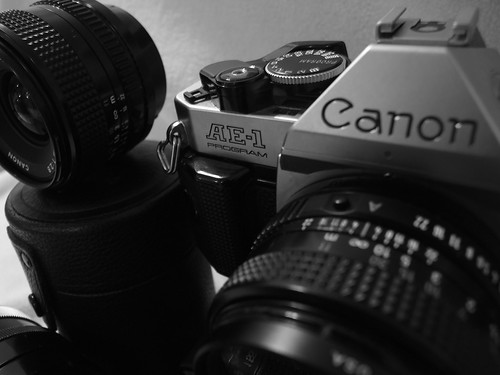
I love this photo of a Canon AE-1 Program, mostly 'cause I had mine out today. I bought it off eBay about 5 years ago for a modest amount, not expecting much, but it turned out to be pristine. It even came with the optional power drive. The AE-1P was one of the last great manual focus cameras that Canon made before going to autofocus. The subsequent T-series of cameras was a bust, apart from the expensive T90, which was quickly killed by the new autofocus EOS line.

It is a pleasure to use, but looking through that viewfinder reminded me of an important fact. I have lousy eyes and am very grateful for modern autofocus cameras. I could never go back.

24 July 2009

FlickrPik: Hohenzollernbrücke


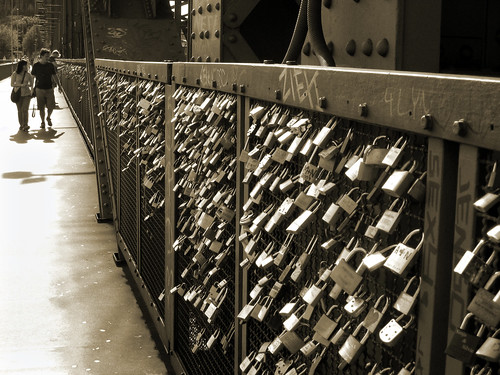
I'm starting to learn Flickr and really enjoy just browsing around some of the groups. This is actually from a camera-specific group for the Canon SD1100, which is on my to-buy list (another post, naturally). I'm going to start posting some of the photos that catch my eye here on TLP. (By the way, I'm posting this directly from Flickr, my first attempt.)

From the photographer: "This is the Hohenzollernbrücke, a large railway bridge which spans the river Rhine in Cologne. Lovers like to attach a padlock with their names engraved to the fence which separates the walkway from the railway tracks. Over the last months hundreds of padlocks have piled up on the bridge."

Moonwalking

No, this is not a Michael Jackson post (sorry to disappoint). I've enjoyed the coverage of the 40th anniversary of the Apollo 11 moon landing this week. Particularly cool were two discoveries. The first is the unveiling of Moon on Google Earth, which is just part of a more extensive collaboration between Google and NASA. It is, as you can guess, a moon version of Google Earth.

The other item is an online archive of all photographs from the last mission to land on the moon, Apollo 17. Thumbnails would be nice, but there are some brief descriptions for each item. Best of all, they put up both small and quite large images of each photo. The sample below is linked out to its large version. And if you like that, also check out the more comprehensive Apollo Image Atlas. About 20,000 photos were taken across all the Apollo missions. Love that classic Kodachrome look (Ektachrome, actually). Great stuff.

I just have to get around to watching again From the Earth to the Moon.


23 July 2009

Compact Digital Cameras: This Is Progress? (Part 6)

So, after all this, here you are.You want to buy a compact camera. Maybe even two, a snapshotter and something a little more serious. You've read loads of reviews and compared test images until your eyes crossed. What should you buy?

For me, image quality is obviously important. The good news right now is that, even if they are not making low-noise compacts, camera manufacturers are getting very good at processing the noise out, at least at low ISOs. And I find that some cameras process the noise in such a way that it results in a film-like grain that is not unpleasing. I actually prefer a little aesthetic noise to overly-aggressive noise suppression, which blurs all fine detail out of images. Many images from compacts have a strange, creamy smoothness, even at low ISOs, caused by noise suppression. At least some of that cannot be avoided in even the best of these cameras.

I think all one can do is evaluate sample photos in camera reviews and decide yourself which camera you personally find least bad. And this almost has to be done on a model by model basis. A few makers (notably Canon) have a certain look they maintain quite consistently, but most do not. The main determinant is the particular sensor and image processing chip used in (very often) a range of camera models.

For example, Panasonic is now using a new 10mp 1/2.5” sensor and Venus Engine IV processor in several cameras across their line. I think the images this combo produces look very good, with low noise and great color and detail (samples here). So for our new family snapshot camera I am looking at an entry-level Panasonic FS7. For the money ($140), it looks very good.

I've also decided to buy an enthusiast-grade camera for myself to replace my old, partly-fried Canon G3. I want something that is SLR-class, with full manual controls, to teach my daughter photography with. That basically means a superzoom. I wish I could settle for the value-priced Fujifilm S1500, but the image quality is not quite there and some users have reported fatal hardware/software problems.

So I've just ordered a Canon SX10 IS. I've owned a lot of Canon gear and find it consistently good. The SX10 has been very highly rated and has a number of features I value, like a twist-out rear screen, exceptional EVF, highly-intuitive menuing, flash hotshoe, and great image-stabilized lens.


I've also always liked the "Canon look" in images. Noise suppression is aggressive, but the in-camera sharpening is strong and produces crisp images right off the card. Color is regularly described as "vivid but natural." Whatever that means, I like it. This Flickr photostream by bEbO (en vac), all shot on an SX 10, tipped me.

The SX10 costs a bit more than I wanted to spend, but I was able to buy it refurbished at a substantial discount. I think the two of us will be happy together. Now I'm just waiting on that UPS man.

22 July 2009

Compact Digital Cameras: This Is Progress? (Part 5)

I am prepared to embrace the truth about consumer compact cameras. No current camera in this category will produce images comparable to a DSLR. Most are not even close. That is a serious problem for me, but it may not be a problem for most people.

Most people, I think, still take photos to make prints, mostly 4x6s. They may look at photos on screen, maybe even mostly on screen, but still they are concerned primarily about making good prints of key photos. For that, most consumer compacts do just fine. Most of these users will not see any difference between a 4x6 from the cheapest Kodak compact and the most expensive Nikon DSLR. Blessed are they.

Not me. I’m a “pixel peeper,” someone with a fetish for pixel-level fidelity. I look at photos exclusively on big LCD monitors where every flaw is revealed. And I also believe that on-screen viewing is the near-exclusive future of photography. As Trey Ratcliff says: “I believe that the future of ‘looking’ at photography will be online. Monitors will continue to get bigger, resolutions will get bigger, and bandwidth will get faster. Imagine a day several years in the future, when people have giant art flatscreens in their house, and your high-fidelity photos will be filling them with incredible walk-up detail.”

Right now the choice for me is either a DSLR, with the expense, weight, risk of theft, anxiety for damage, etc., that entails, in pursuit of great images, or pick up a consumer compact I can use and abuse without concern and be content with its limitations. I’m going the latter route. And frankly, it’s what I can afford right now.

But I'm not all that sour about it. The latest compact cameras have several features that really are worth upgrading for. Leaving image quality aside, I'll note three:

1. Sensor-based shake reduction or (better) lens-based optical image stabilization (OIS) is very important. It will sharpen up your photos and give you one or two extra f-stops of exposure. This is a huge deal for compacts since you really have to use them at low ISO settings for good image quality. But, not all makers and cameras are equal with their shake reduction/OIS. Read the reviews.

2. Better LED screens. Not just bigger, but better in terms of resolution, color fidelity, and viewability in sunlight and at off-angles. Big screens suck your batteries dry, so I'm fine with 2.5". But it better be 230k and usable in daylight. One of my biggest gripes with my old Canon G3 is its terrible low-res 1.8" LCD. You just cannot effectively check capture quality on it.

3. Good scene modes with automatic selection. Most snapshot cameras have loads of different scene modes. Some are gimmicky (food mode?) and others are very useful (backlight correction). The new ability for cameras to automatically select the right mode is great in theory. No more need to switch to macro mode for close-ups. But I'll be interested to see for myself how accurately it works in practice. Anyhow, for snapshotters, this is brilliant.

Next: Conclusion (finally!)

21 July 2009

Compact Digital Cameras: This Is Progress? (Part 4)

Manufacturers and pundits tend to distinguish between consumer and prosumer compact cameras, but there is no hard consensus on where to draw the line. I'll make it simple. I draw the line at $400. Above that and, any more, you are into DSLR territory in terms of cost. Anyone willing to pay as much for a compact as a DSLR definitely rates the title prosumer.

That settled, clearly there are some prosumer compacts that take great photos. Some are superzoom style, meaning they are just smallish SLRs in form as well as price. They are therefore sometimes called "bridge cameras." Of these, I like very much the Fujifilm S100FS ($530 street). It has a large 2/3" Super CCD sensor and 28-400mm lens that makes it a very good all-arounder.

It is debatable whether a superzoom camera is a compact, since it certainly won't fit in even a cargo-pant pocket. But there are also a few superlative prosumer pocketable compacts. For example, the Panasonic LX3 has a larger 1/6.3" sensor carrying a relatively modest 10.1mp, and the image quality is very good. It is housed quite compactly and paired with a fast and very wide 24-60mm (equiv.) f2.8-3.0 lens. The telephoto range is a bit short, and it is not cheap ($550 and up, street), but still, as one reviewer notes: “The LX3 is an example of a species so endangered that we were beginning to worry it had become extinct - a compact camera that photographers can get excited about.”


Panasonic LX3

The big problem in the compact segment is of course sensor sizes and pixel counts. I've just mentioned two cameras that use larger than average sensors. But most pricey prosumer cameras just use the same tiny, noisy sensors as models downmarket. That's right, same image quality as cheaper models. Price does not often buy you better images in compacts.

But I think this trend will turn around, at least a little. The most encouraging rumor to me is that the next Canon G-series camera will have a full DSLR-sized (APS-C) CMOS sensor, paired with a very modest, but doubtless fast and sharp 24-70mm zoom. It should therefore be a big one-up on the Panasonic LX3. It will also cost north of $600, certainly, but I get excited even about great cameras I can't afford.

But what about consumer cameras? The ones we can afford? (Part 5)

Update: Fujifilm is updating their S100FS to a new model, the S200EXR, which will have (you guessed it!) a smaller sensor with more megapixels. Oh Fuji, will you never learn?

20 July 2009

Fallen Giant

I was shocked to read last night that Wall Arch on the Devils Garden Primitive Loop, Arches NP, collapsed during the night of August 4th, 2008. Wall Arch was formerly the 12th largest in Arches NP and a favorite place to stop and munch a granola bar when hiking the Garden. I took this "before" photo in 2005 (click for larger view). News release with an "after" photo may be seen here. Of course, having an arch in the park collapse in one's lifetime is the rarest of events. But I really don't feel a sense of history. Just sadness. Farewell, old friend.


18 July 2009

Compact Digital Cameras: This Is Progress? (Part 3)

Almost all compact cameras are simply throwaways. Unlike my Yashica, nobody will be buying my old 4mp Canon A510 compact off eBay in 40 years and marveling that, even by 2050 standards, it produces pretty damn impressive photos.

Of course, manufacturers are not in the business of making products so great that no one wants to replace them. In fact, that would put them out of business. So I guarantee that your next compact camera will have more megapixels and a bigger screen than your current. But I also know of a four year-old compact that will take better pictures than that new camera.

Fujifilm has employed in some cameras a unique “Super CCD” sensor design that produces superb, low-noise images. In 2006 they wisely decided to use it in a compact with a larger than usual sensor (1/1.7”), aiming for superlative image quality. The Fujifilm F30 and subsequent F31fd cameras have since become legendary among enthusiasts. As can be seen from test photos, the images they produce, even at higher ISOs, are impressively crisp and clean. Even if not DSLR quality, and just a modest (but sufficient) 6.3mp, these cameras are still ahead of most or all new consumer-segment compacts.


Fujifilm Finepix F30

Unfortunately, while critical response was strong, consumer response was modest. These cameras necessarily cost a bit more and, for that money, lacked marketing-friendly features like giant LCDs, superzoom lenses, and ridiculous pixel counts. So Fuji caved, ramped up pixel counts, and destroyed the superb image quality. Now a used Fujifilm F30/F31fd goes for absurd prices on eBay. Even serious SLR-toting photogs like to have a good compact on hand, and are willing to pay for it.

So, for just such serious shoppers, what are the current options? (Part 4)

17 July 2009

Orwellian Irony

The latest Kindle-bad/books-good story, reported by the NYTimes, is satisfying on soooo many levels. I won't spoil it with a rehash. Just read it and then go curl up with your own dog-eared paper copy of 1984 from high school.


16 July 2009

Compact Digital Cameras: This Is Progress? (Part 2)

We all know that the resolution of digital cameras is measured in megapixels, and a pixel is a single point in an image. Each pixel reproduces a single point of color. Aggregated together, those points of color comprise a photo. These pixels are generated by a photo sensor, onto which these pixels sites are packed very tightly together. Their proximity causes them to interfere with each other, increasingly more as exposure time or sensitivity (ISO) is increased. This interference is registered as noise in your photo, sometimes called “digital grain.”

Except, whereas photo film grain can be rather aesthetic, digital noise is plain ugly. In fact, one of the biggest differences between camera models and brands is how effectively the manufacturers manage image noise. They expend enormous resources to engineer noise out of their cameras, in part because they are constantly building more noise into them.

The dilemma is this. One really expensive part of a digital camera is the imaging sensor, and the smaller the sensor the smaller the lens and camera overall, all of which drives costs down dramatically. But the only way to shrink the sensor is to shrink the pixels and limit or reduce pixel count, or else crowd those pixels closer together. Making more noise.

Since raising pixel count is a vital marketing tool, due to consumer ignorance (everyone likes a simple better-than metric), the only option is to make those pixels smaller and pack them tighter to fit ever more on those chips. And the smaller and denser the sensor, the less dynamic range it has and the more noise it produces. Sensor size and pixel density are critical bits of information, but manufacturers do not advertise them. When you do find the sensor size for a camera, the specification is arcane, leaving you to crack the code.

I mentioned dynamic range (DR). This is the total range of tonality, between the lightest and darkest parts of an image, that a camera's sensor can record. Image data that exceeds this range is clipped, meaning lighter details turn to white and darker details to black. The tiny sensors and lenses of compacts gather and record a much narrower dynamic range than DSLRs. This is a critical issue for image quality. More than anything, compressed DR gives compact camera images that compact camera look. In addition to high noise and reduced DR, compacts also tend to exhibit more chromatic aberration (purple fringing of highlights) and optical defects, due to their little, cheap lenses which have to resolve ever more optical information.

So now we have 12 megapixel compact digicams with itty bitty sensors packed with itty bitty pixels that generate almost as much noise as clean data. Camera makers have therefore become wizards at managing noise. They smear it around and apply all kinds of clever algorithms to disguise it. Given the garbage these sensors produce, what they extract from them is pretty amazing, at least at low ISOs and short exposures. But the overall trend to make more and worse pixels is tremendously discouraging to those who value image quality, or want to do less-than-perfect-light photography, even with compact cameras.

DSLRs take the beautiful, clear, noise-free images that we all want, because they have big sensors with large pixels that produce superb pixel-level fidelity. Couldn’t compact cameras be made to do the same thing, maybe even at terrific compact camera prices? Yes and no. (Part 3)

15 July 2009

Compact Digital Cameras: This Is Progress? (Part 1)

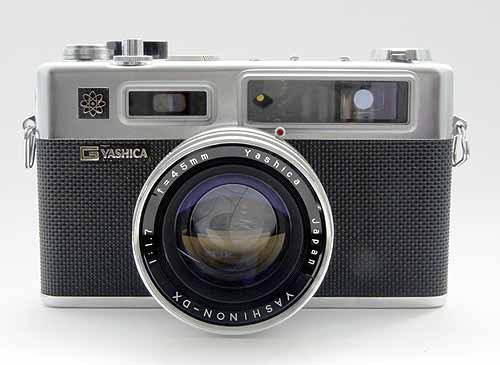
I own a Neolithic predecessor to today’s compact digicams, a Yashica GS 35mm rangefinder camera from the early 70s. It was, in its day, a cheap but good Japanese alternative to the seminal Leica M4. But because the quality of film stock, processing, and printing are such crucial elements for a film image, even a cheap but good film camera, in the right hands, can produce photos almost as good as the most expensive gear. So as one modern user notes, the Yashica gives you “90% of the image quality [of a Leica M4] at less than 5% of the price.” I paid about $20 for mine and it still works almost as well as it did new.


A film camera is just a lightbox. Assuming the shutter mechanism is accurate, the quality of a film image (on the camera level) is determined simply by correct focus, correct exposure, and the quality of the lens.

Those first two variables, on cameras like the Yashica and Leica, are mostly left up to the user. As for the lens, the Yashica has a 45mm f1.7 Yashinon that is much faster than even the fastest modern zoom, and surprisingly sharp. With good film and a capable user, the Yashica can indeed produce Leica-caliber photos.

In contrast, modern digital cameras are separated much more in image quality by engineering, components and, consequently, price. Unlike days past, you now have to pay for image quality mostly on the front end, in your digital camera purchase, rather than mostly on the back end, in film and processing.

Don't think for a second that this is a bad thing. The economics of digital are great. Really great. Photography has never been cheaper. But skimping on your camera purchase, or making a bad camera choice, can really only be remedied by buying another camera. Informed buying has never been so important for photographers of all levels.

But it is an unfortunate fact that while my $20 Yashica can produce Leica-caliber photographs, a compact digicam takes nothing like the quality of photographs that DSLR and DSLR-class prosumer cameras do. And most digi-compacts can’t touch my Yashica, either, at least when it is in capable hands. In fact, some modern compacts produce worse quality images than the models they replace.

Here’s why . . . (part 2)