10 July 2010

Pirates, Part 2

Mr. Fweem very nicely elaborated on my previous post, from his perspective as both a consumer and creator of creative work. I started to write a long comment to his post, but decided to take it back here. So first, read his post. Then read the article he links to by Tony Woodlief.

I think Woodlief's article illustrates again in a number of ways that this is not primarily (or at least, generally not perceived as) a battle between creators and consumers of creative work, so much as between consumers and the corporations who control and exploit creators' work. Woodlief is not criticizing Joe Henry over wanting outrageous fees for citing one line of one song, but rather "his record label's parent company." Who is not looking after Mr. Henry, but after their bottom-line. That, at least, underlies Woodlief's argument and reflects general public sentiment. To me, the first element of copyright reform is ensuring that copyright protections benefit creators, not corporations that make billions by exploiting artists for their sweat and genius. I use the term exploitation frequently, but not lightly. For the uninitiated, see producer Steve Albini's classic "The Problem with Music" (profanity warning) or, more recently, Tim Quirk's drama with Warner Music over at Too Much Joy.

Everyone is in favor of compensating creators, of course. And when the composer in my original article started contacting traders of his music, saying it was not cool, most of them quickly apologized and took his work down. Of the 400 or so take-down letters sent, just one dumb teenager wanted to argue about it. The question for me and, clearly, many other people is not about supporting creators, but whether both creators and consumers should permit themselves to be victimized by corporate exploitation when they have the ready means to render those corporations irrelevant. The consensus is clearly that we shouldn't, and that this is about both parties.

On the other hand, I don't personally believe that creators have any "right to expect -- and receive -- some kind of remuneration for their creativity." And I say that as a creator. All of us are creators; creative work flows naturally from the act of humans living life. Almost none of it will ever be compensated and only the market can determine what of it has economic value. I think (e.g.) my daughter's hand-drawn Father's Day cards should have the market value of a Picasso, but I doubt the market would ever agree.

No creative act has any inherent monetary value, and the work or lack of work that goes into creative endeavor does not change that fact. Otherwise, explain Jackson Pollock to me. If we create something and no one will pay to enjoy it, that's either a market or marketing failure. It's certainly not a creative failure, though it can feel like that. Many of us choose to distribute our creative work freely because we would rather it be enjoyed by anyone with any interest than restrict it to those (typically very few) with interest enough to pay. The internet gives you more options in both those respects. Go internet.

But I hold all creative acts as being strictly equal, as creative acts. Market value measures only popularity. Someone once asked a famous songwriter what makes a song a classic. He replied, "Repetition." Classics are first and foremost marketing successes. Some also happen to be works of genius, but most are not. And copyright law is not for the fostering of genius, but for the fostering of marketing success. Marketing success may or may not itself foster creative genius, but judging from the quality of most corporate art, I'd say mostly not.

An example of my ideal. Twice in the last month I've gone to see a local band called Gypsy Cab, which is just one genius blues guitarist (Pat) and his drummer (Jesse). Pat is an 18 year-old who plays original electric blues on $200 Squier guitars through one very loud Fender Twin and smokes 98% of the guitarists I have ever heard. I paid to see them and I will again. I'm dying for CD. And a T-Shirt. I'll pay for those, too. And anything else they want to sell me. No corporations need to get involved. I'll just give them my money.

09 July 2010

Pirates, Hoarders, Saviors of Culture?

This post by David Pogue is not interesting for David Pogue (who I rarely find interesting), but for the letter it reproduces, the issue it raises, and some of the 300+ comments it has generated. The fundamental issue it raises concerns those (many, MANY) people who are engaged in scanning and trading print materials in the same way millions do music and movies. The particular subject here is sheet music, but it could be anything ever put into print. I've been involved with this professionally for some time, for example, in creating a digital library for Syriac scholars. For this project we only included out-of-copyright materials, but informally scholars trade copyrighted research materials on a massive scale, just like these music traders. With equal excitement and glee, and a similar lack of compunction.

Academic swapping and hoarding of copyrighted material is called research and is protected in some measure, ostensibly, by fair-use laws. These laws exist to facilitate research and creative work. There is no possible way any scholar could purchase all research materials used. But no scholar was ever sued or even called a pirate for photocopying (now, scanning) an article or monograph, because you can't produce more articles and monographs without doing this. Copyright law was always meant to curb commercial exploitation of another's creative work, not to prevent the use of that work in creating new work, whether artistic or scientific.

Also, I'm not sure copyright law was originally intended to curb the profitless enjoyment of creative work without payment to the copyright holder, who so very often is not even the creator, but rather a commercial exploiter of creators. But I'm no legal scholar and that's another topic.

When a pianist, as in this article, collects all the significant piano music ever published, pops it on a thumbdrive, and gives it away to other pianists, I have a hard time seeing any difference between that pianist and most scholars. Probably, true enough, this is sowing some seeds of destruction, but it also contains the seeds of creation. And I don't know why doing this is fair-use if you work at a university but piracy if you, well, work for a living. But of course, if academics ran the world, we'd replace copyright with open access on day one, or at least some generous implementation of Creative Commons licensing.

I see this as principally an economic problem, as many commenters to this article pointed out. People with more time than money will always trade and hoard, but put all this sheet music in a database and charge $10/mo for access, and much of this activity would stop. The people who did not stop are mostly people who would not buy your stuff anyway (i.e., the teenager in the article). This is just the market's way of saying that prices are too high and selection too limited. If your time is worth anything, this traded music is not free. People spend years collecting this stuff, at a very high effective cost. It's just cheaper than the alternative, and for many rare or out-of-print works, the only alternative. As one commenter observed:

    This is actually quite an interesting economic phenomenon. The fact that people illegally acquire content that is copyrighted shows the imperfect market. We, as consumers, don't always find the suppliers we want. As an example, in my town I cannot buy bok choi in the supermarket. I'd have to drive really far away to get it. I don't have the option of "stealing" it in any way that is easier. The internet allows this, though, and it's something classical economics hasn't thought about much: Stealing as a means of overcoming the imperfect market system.

07 July 2010

Old Media vs. New Media?

My favorite columnists are (like ten million other people) David Brooks and Gail Collins of the New York Times. Brooks is the rational and pragmatic me and Collins is my inner cynic. Their Opinionator exchanges are regularly fabulous.

This most recent exchange was on Old Media vs. New Media. Brooks clearly sees himself as the former and, implicitly, Collins is colored as the latter. Old Media is dedicated to "just the facts, ma'am" impartiality and accuracy that (per Brooks) can only be done if there is a certain degree of coziness with the subjects, at least if you are covering a beat. Burn or sour your sources and you will be reduced to punditry, speculating from the outside without any direct access to the most relevant people and facts. Collins sees her journalistic self as a member of "scorn contingent," whose job it is to burn those who deserve to be burned, and damn the consequences. Better perhaps to speak forcefully based on half the facts than with restraint on all of them. Collins is clearly less concerned than Brooks about straying into the territory of advocacy media.

Is this really the divide between old and new media? Does "just the facts" reporting require certain compromises, just to get those facts? Are those compromises unacceptable? Are reporters charged with an advocacy mandate? Should we have a professional "scorn contingent"? Is that the new journalism?

06 July 2010

Seeing Red

I just sent back one compact camera, unhappy with its image quality, and am ordering another, hopefully with better results. I'd been most seriously considering the Canon SD940 IS both for its features, like a 28mm lens and 720p HD movies, as well as its credit-card size. Reading some user reviews, I was put onto the imaging-resource.com Comparometer, which lets you view identical test shots from scores of cameras side-by-side. One must allow for camera sample variation, etc., but if image quality is your concern, it sorts out the winners and losers (or at least your preferences) in a hurry.

I've looked at a lot of test images in the past and had a decent idea of what to expect. Basically, as I've blogged ad nauseum before, the smaller and newer the camera (= more megapixels), the worse the images. Budget compact cameras just cannot compete in image quality with the flagship large-sensor compacts (Canon S90, Panasonic DMC-LX3, etc.), and certainly not with DSLRs and the new m4/3 system cameras. But moving up to those cameras involves much higher cost and/or greater weight and size. I want something pocketable and cheap (<$150) that takes great pictures.

So what does the Comparometer reveal? It generally confirmes the points just mentioned, but also illustrates: (1) managing the massive noise produced by compact camera sensors is all about tradeoffs and (2), all else equal, some cameras just manage to get it very right and others very wrong. Some manufacturers are consistently better than others—I like Canon and Panasonic best—but even so, image quality really varies.

So take Canon and Panasonic. Canon generally does a great job in keeping noise down, but does so by using heavy noise suppression. The down side is that may suppress both noise and image detail, producing smearing. Combined with the reduced dynamic range of compact sensors (and Canon's tendency to overexpose), this can produce plasticy images, especially of things like shiny foliage. All plants tend to look like rubber plants. Canon also favors a very warm look, meaning lots of reds, which can cause the red channel to clip faster than others. This can result in very hot, smeared reds.

Panasonic, on the other hand, prefers slightly cooler colors and sees reds well. They also use a lighter hand with noise suppression but strong sharpening. That can produce a somewhat gritty look up close, especially with flat surfaces (some call it "stippling"), but due to good color management, Panasonic images are also less saturated and plasticy. I prefer Canon's noise management, when not overdone, but Panasonic's color management. I certainly like the way Panasonic sees red, which is more restrained in its rendition.

Below are five image details from five cameras of swatches of colored fabric. I've ordered them from best to worst, in terms of both detail and color rendition. All have been reduced in resolution, so the test is not entirely equal, but I think it works as illustration (click images for full size).

The best image is from a Canon DSLR, so no surprise there. The second best is from an older Canon compact, the PowerShot A2000 IS. Now that was a surprise. It is a bit noisier, but otherwise compares very well with the DSLR's image quality. Third is the Panasonic DMC-ZS1 that I recently bought and reviewed. Later ZS-series cameras continue to look that good. The A2000 preserves a little more detail with less noise, but they are almost a tie. Fourth is my older Canon A590 IS, which preserves decent detail but suffers from too-hot reds. Finally, we have the Canon SD940 IS, which I was looking at purchasing. It suffers from significant detail smearing and blown out reds. And most unfortunately, nothing in Canon's current compact lineup, below its its two top models (the G11 and S90), looks that much better. Two thumbs down.

The Canon A2000 does not have all the features I want in a budget compact. But its image quality looks shockingly good. Great noise management, great detail, and great colors, even the reds. It is a 2008 model, out of production, but refurbished units are available on eBay that fall under my el cheapo price limit. I'm all in.


Canon EOS Rebel T2i


Canon PowerShot A2000 IS


Panasonic DMC-ZS1


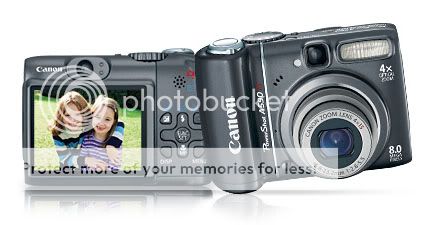
Canon PowerShot A590 IS


Canon PowerShot SD940 IS

04 July 2010

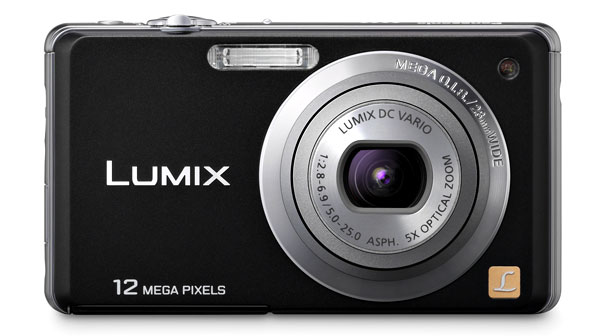
Panasonic DMC-FH1

I just received this camera last night and, well, it's going straight back. It is certainly not bad, but just does not work for me.

The Good: It looks like the younger sibling of the ZS1 I just reviewed. In other words, beautiful. But thankfully it has much faster focus and performs very nicely. The lens is very sharp and contrasty, and is a wide 28mm, with 5x optical zoom and image stabilized. I took sharp handhelds with it at 1/8 sec shutter speed, no problem at all. It also has 720p HD video. For a $125 camera, it is very feature rich.


The Bad: The UI is redundant and, for a camera with so few settings, a bit hard to navigate. It has three buttons that get you to basically the same settings. Entirely too much. And as I say, it really has very few settings. It is an automagic point and shoot with almost no manual options. I was not expecting much that way, but the one must-have feature it lacks is any kind of exposure lock or panorama assist. I shoot panoramas all the time, so this was a deal breaker. But in addition, the image quality was just not good enough. Even moreso than the ZS1, it has a tendency to produce blotchy chroma noise in the shadows. Its image noise in general is unaesthetic (and yes, some noise is prettier than other) and its sharpening is set to nuclear. The result is some pixel-level nastiness, even at ISO 80, that I just could not live with.

The Verdict: So back it goes. I wanted to like it, but for just a bit more money I can get a Canon SD940 IS, which is roughly equivalent in specs, but has more manual features, including both exposure lock and panorama assist. Test images in reviews also look very good and noise-free at low ISOs. I've owned a lot of Canons and always liked them. So back to Canon I go.

03 July 2010

First Trip to iBooks

So, I load up iBooks for the first time and find that three of the top ten paid books are by Mormons, two by Stephenie Meyer and one by Glenn Beck (a novel, ghostwritten). I've puzzled on this before. Mormons seem to have a disproportionate presence in politics, popular fiction, and multilevel marketing companies. In all those areas we are consistently an embarrassment. Can someone decode this for me?

Apple is reported to have added 30,000 free titles from Project Gutenberg. Searching for "Gutenberg" will get you to quite a few. But trying Treasure Island out on the iBook reader, it doesn't impress me. There are basically no configuration options. Parts of the copy of I downloaded do not scale to portrait orientation, so you have read it landscape, ten lines at a time. When you change orientation, the iBook reader takes a five full seconds to respond. The book has plates, but again, they only display landscape and are a bit scrambled. Etc., etc. Stanza beats this reader to pieces. Color me unimpressed.

02 July 2010

Panasonic DMC-ZS1

As mentioned the other day, I just purchased a refurbished Panasonic DMC-ZS1 for my daughter, a very sharp young photographer. I bought it for it's exceptionally wide 25-300mm equiv. lens, great image quality (per glowing reviews), and modest price. It also has a very close macro focus distance of just 3cm, and Tasha does love her macro.


The Good: It looks and feels like a high-quality camera. The 2.7in hi-res LCD is excellent, a big upgrade from past cameras. For the first time we own a compact that you can effectively review picture quality on. It has quite good ergonomics and great battery life, and in auto mode it produces consistently great photos. The images look very sharp and have great color. Perhaps more real that real, but to modern eyes, that's just how pictures should look. Chromatic aberration (purple fringing of highlights) is exceptionally well controlled, and overall the photos exhibit less clipping than most little compacts, which gives compact camera images a consistently plasticy look. These images look a bit more more SLR-like, with less harsh transitions between high and low contrast. And, most importantly, Tasha seems to love it.

The Bad: (1) As many people have commented, the top dial is too prominent and in the wrong place. You have to wrap your finger around it to push the shutter, which feels unnatural, and some people have problems with it getting turned inadvertently. (2) The focus is slow, probably a byproduct of that long lens. That's typical of compacts, but I find this camera annoyingly slow. (3) Images look great at screen resolutions and probably in prints, but at a pixel level, noise reduction and sharpening is very obviously too aggressive and cannot be turned off. Also, sometimes low-contrast areas suffer from slight dithering or blotchiness. This is odd, since sample photos I've seen on review sites lack these faults, at least to this extent. So I'm not sure what to think. Perhaps a badly done firmware revision. Again, you would probably never see this in regular viewing, and in all other respects image quality is excellent. But up close it's a bit disappointing.

The Verdict: If you want a wide-angle compact, this camera cannot be beat for the money. In fact, probably nothing else can be had for the money. It suits my daughter's photographic interests perfectly. I wish the pixel-level image quality was better, but as sensor densities continue to increase, that kind of quality will continue to decrease. Really the only place to go is to high-end compacts or DSLRs, for which you will pay triple over this camera, starting. So I give it 8 out of 10.


The Photographer. All images are straight out of camera.

01 July 2010

Self-publishing Blurb

There are at least four threats that academic publishers, mostly in common with traditional publishers, are facing. The first is, naturally, the internet, which allows anyone to publish anything to everyone for free. The second is a decline in academic library purchasing and changing acquisition strategies, described partly in my previous post. The third is open access initiatives and university archival repositories, which are initiatives to make published research publicly accessible and (in cases) keep it under the control of sponsoring bodies. Universities are sick of having to, e.g., pay $10,000 a year to subscribe to a single scientific journal so that students can access the work their own faculty have published in it. They want to quit giving their intellectual property away.

Finally, there is the unstoppable tidal wave of self-publishing. Laura Cerruti of UC Press threw out this terrifying statistic. In 2009, 288,355 titles were published by US publishers, but an additional 764,488 titles were self- or micro-published. From other statistics I could quickly find, this is apparently about a 270% increase over 2008 totals, which had increased 132% over 2007. In 2007 traditional publishers were still publishing most books. In 2009 they were fighting to retain 25% of exploding booklists. UC Press is themselves shifting their resources into assisting (on a contract basis) UC units in self-publishing their research. That's clearly where the action is.

The gamechanger here is the plummeting cost and rising quality of print on demand (POD), which revolves around self-contained printing/binding machines that can produce bound books on a per copy basis very cheaply. The U of U's Marriott Library has one and are rapidly moving to the point where students can use ebooks online and, if they want a print copy to use, just hit a "Buy" link, type in their account code, then walk down to the Espresso POD machine and pick up it up. The library will add books to their own print collection in the same way.


Traditionally POD books are ugly and cheap paperbacks, the product of a fancy copy machine, but there are commercial-grade POD presses that can produce high-quality hardbounds. In fact, many commercial presses are moving to POD-only printing (most everyone will eventually), since it eliminates too-large press runs and warehousing. Third-party services will proxy for individuals wanting this same quality for their personal publications. The cost is shockingly low.

I read an article today on one such service specializing in full-color art and photography books, Blurb. Per unit prices for 7x7 color start at $12.95. They provide tools for online promotion of your title and a bookstore to sell it in. The quality is 100% commercial grade. Of course, editing and design is up to you, but all profits from sales are yours, too. Services like this are why self-publishing is going through the roof, and publishers are very, very worried.

30 June 2010

The Ebook Revolution in the Academy

I just attended the Association of American University Presses (AAUP) conference in Salt Lake City. I've seen the future. Print is declining and, at least in academic publishing, is about to fall off a cliff. University libraries are moving to e-books as quickly as possible, for two main reasons:

1. Ebooks never go out of print, so there is no reason to buy them purely against future need, as has been the case with print titles. Since about half of all library books are never used (really, zero usages, ever), that represents enormous cost savings. For the University of Arizona, for example, buying only titles that researchers actually used would mean saving about $20 million over ten years.

So U of A and most other schools are revamping their acquisitions to be patron driven. For example, in one system, if a library patron wants to use an ebook, they click on a link and it is rented to the library by a vendor. After three or four usages (rentals), the ebook is automatically purchased. Libraries are willing to pay higher than print cost for ebooks if they are actually used, and with the upside that they quit purchasing books that are unused.

But in fact, ebooks are generally much cheaper than print titles, since they are often purchased in large bundles for just 25 or even 10 cents on the dollar of print cost (and needing a fraction of the conservation and storage costs). And with library budgets being slashed, print books are seen increasingly as a nostalgic luxury.

2. Users now expect instant (= digital) access to information. The current generation of students, so-called “digital natives,” have ceased to regard libraries as repositories of information, and are as comfortable reading books digitally as in print. And since digital is more convenient, use of print materials is dropping. Print is therefore both more costly and less used.

Protests that paper books are preferable to ebooks are not borne out by usage rates. At Univ. of Chicago, they have tracked usage rates for titles held in the collection in both paper and digital formats. The print titles average .43 circulations per year, and 3.81 circulations over their lifetime in the collection. The very same titles in electronic format averaged 17 uses per title per year. That’s 34 times the usage rate for digital items over their identical paper counterparts.

Even when digital collections are purchased as large packages, usage of the entire package per year is consistently over 80% (i.e., only 20% of titles are not used at all per year). However, usage of print materials in collections is a fraction of that and falling. Circulation rates of printed books per student have fallen by half in the last 15 years, and are accelerating. Presently, 75% of all library print materials are used just 0-1 times per decade; 47% are never used at all. And again, these printed book usage rates are falling at an accelerating rate.

What many of us who are older utterly fail to appreciate is that the rising generation has no preference at all for print over electronic reading. In fact, just the opposite. We duffers who extol the tangible aesthetics of print over cold and soulless digital are like the ancient scribes who carped that scrolls were far preferable to those newfangled codices (i.e., books). Parchment better than paper. Elegant scribal handwriting over ugly movable type. Really.

As a press director from MIT said, “What is amazing is the generation gap between people who are 30 and people who are 23.” This is why print is dying; younger readers do not like it. The overwhelming and rising demand from students and scholars generally is for e-pubs that are supported on multiple platforms, DRM-free, and available off-line. Think iPads, iPhones and Kindles. If you snooze on this, you lose basically everyone under 30 as your readers. Again, academic ebook sales are growing 300% a year and rising, while print book sales are stagnant or falling.

This is not just terrible news for print book lovers, but much more so for publishers. They were stumbling out of conference sessions to the nearest bars. They, too, have seen the future.

29 June 2010

A More Correct Perspective

I was rereading a series of posts I wrote last July on compact digital cameras. I've just purchased two, in fact, one for my daughter and one for myself. For my daughter I bought a refurbished Panasonic DMC-ZS1, a compact superzoom that produces really fine images for its class and has a very wide 25mm (equiv.) Leica-designed lens. It's not perfect, but for $150 it's a wonder.

I've ordered a Panasonic DMC-FH1 for myself, but it's not here yet. It's very inexpensive, but has a fast 2.8 28-140mm equiv. lens (5x zoom), as well as optical image stabilization. The wide, fast, and quite long lens was important to me, and to get that in a $125 credit-card compact, less than an inch thick, is unexpected. And reviews say the picture quality is excellent. I've always owned Canons in the past, but Canon models with equivalent features start $50 higher. And I'm not sure they have anything on these Panasonics.

In the past, you just could not find a compact at any price with these fast, wide lenses. That they now can be had so inexpensively is real progress. I find long zooms not so useful, but a wide angle lens is indispensable. Not having that has been one of the biggest compromises in using a compact. Paired with a fast 2.8 aperture, which gathers lots of light, and the stabilized lens, you gain both wide angle and four f-stops over older compacts. They are just made for natural-light indoor photography, which I do a lot of when traveling.

Lens tech has advanced, certainly, but still: how can they do this? And at these price points? The problem traditionally is that it takes a lot of highly optically-corrected glass to build a fast, wide zoom lens that does not suffer from gross optical defects. That translates into bulky, expensive cameras. One of the big tricks that manufacturers have pulled off is the correction of optical defects in the camera's image processing software. A great article on this has appeared on dpreview. I expect this wizardry is used in my Panasonics. This permits much more flexibility in lens design, permitting smaller, cheaper (if optically less perfect) lenses.

Dpreview also addresses the question: Is this cheating? Traditionally, lens makers have expended extravagant resources to remove all possible optical defects, and photographers have correspondingly paid for it. But some purists think that is the correct order of things.

    Every time somebody does anything with a digital camera that couldn't be done in a film darkroom, people have called 'foul' and make accusations of cheating. However, 20 years after the appearance of Photoshop, it's safe to assume that a degree of post-shoot 'retouching' is the norm, rather than a sneaky exception (and remember that plenty of secrets could hide in the darkrooms of skilled practitioners). At which point, there's a chance that one person's cheating might turn out to be progress for the majority.

Yeah, I'll take that progress.

28 June 2010

I'm Back. More or Less.

When I closed up shop nine months ago, it was mostly out of sheer busyness. I'm not any less busy, but I'd like to meet anyone who is less busy now than they were last year. That's just not the nature of modern life. But I miss my blog, mostly 'cause I like reading what write. It's the only kind of journal I'll ever keep. Evidence of my existence.

I'll continue to mostly blog on my geeky leisure interests, since I am my own primary reader, and I like reading this stuff as well writing it. (Vanity?) I guess I could write political commentary, or haiku, or something Important or Serious, but I have no passion for Important or Serious things, except in occasional and small doses.

Anyway, perhaps the world needs more haiku, but definitely not more political commentary. Hmmm, haiku. Maybe camera haiku.

17 September 2009

Closing Up Shop with . . . Helvetica?

I've decided to stop posting to TLP until 2010. I'm trying to complete my PhD dissertation and simply need the time and energy (and words) for that project. 15 minutes here and there does not seem like a problem, but as all bloggers know, the time really starts adding up. I need fewer distractions. I enjoy this too much. And I'm in really deep water. This was not a hard call.

I'll probably start blogging again in 2010. Maybe here, maybe on Tumblr, maybe not at all. Maybe I'll get serious about my Flickr stream instead. I'll be sure to let all of my readers know. Yes, both of you. Thanks.

So, on to Helvetica. Yes, the font Helvetica, which was made into Helvetica the movie. When fonts can be optioned as movies, you know that we really are living in an age of wonders.


When I first started working in academic publishing a number of years ago, I really became interested in typography. I've even reviewed a book on the history of Syriac typography (very interesting . . . no, really). Typography can mean the art of printing or the art of typeface design. Both are interesting, but as much as a nonartist can be, I'm especially interested in type (fonts) as an aesthetic object, as functional art.

Fonts present a fascinating paradox. We use them and look at them all day long, but they are, unless we stop and think about them, completely invisible to us. They are the ultimate signifiers. No symbol provides a more transparent container for its meaning than the strokes that form a letter.

But a letterform is surprisingly plastic and allows a subtle but broad latitude for expression. Letterforms are evocative artistic objects that shape our response to the messages they are used to convey. They have a cultural power and provoke an aesthetic response that most of us, most (or all) of the time, are completely unaware of. Simple printed letters are the most ubiquitous artforms in our lives.

Today there are tens of thousands of fonts, but a bare handful dominate most typewritten communication. At the top of the heap may be Times New Roman, the default serifed font for Windows. It's ugly and I hate it and Microsoft has flooded the world with it. Blast Microsoft.

Apple, on the other hand, commissioned a stunningly beautiful font, Hoefler Text, with which to begin the era of computer typography. Obama has made it the default font for whitehouse.gov. Only Mac users can see it, though. Blast Microsoft.

Apple adopted Helvetica as their default sans serif font. It was a logical choice. Helvetica has dominated sans serif type usage since it was introduced in 1957. You see it every single day and almost certainly have no idea. As a font, I think it is beautiful, at least in light and medium weights, and very functional for a broad range of titling and short-form uses. Unlike Times, designers use it constantly, even after 50 years. All considered, it is perhaps the single greatest font ever drafted. But Microsoft did not want to pay a licensing fee for it when they introduced Windows, so they produced an ugly knockoff called Arial. No designer uses Arial. Yet again, blast Microsoft.


I recently watched Helvetica the movie and highly recommend it. It is indeed about the font, but much more about typography, its recent history and practice, and its invisible influence on us. It does a great job of communicating the mystery of the art. As an enthusiast, I got small thrill from the interviews with some leading typographers, especially Hermann Zapf.

Zapf's designed a number of fonts, including one in particular that everyone has seen and most people have used, Palatino Linotype.* Palatino is based on Zapf's own calligraphic handwriting. It is one of only five common fonts approved for use in my PhD dissertation, and is the one I am using. So Zapf's letterforms are my constant companions. They're unique and beautiful. I never get tired of them. To meet their creator, after a fashion, was a buzz.

Helvetica the movie may be purchased from iTunes or wherever fine documentaries on typography are sold. Some clips are available here. These include an outtake of the Zapf interview and a priceless few minutes with Erik Spiekermann ("[Fonts] are my friends. Other people look at bottles of wine, or whatever, or girls bottoms. I get kicks out of looking at type. It's a little worrying, I must admit . . .").


* Microsoft originally distributed only a knockoff of Palatino Linotype with Windows, which is called Book Antiqua. Starting with Windows 2000 they have also included the authentic, Zapf-produced version of Palatino. You'll still find Book Antiqua under your font menu, but accept no imitations.

16 September 2009

iPod Thoughts

As every geek knows, Apple refreshed their iPod line last week. Is there anything to get excited about? Not a lot.

The iPod touch got a price cut for the 8gb model ($199), with 32gb ($299) and 64gb ($399) models following. All evidence points to the probability that Apple had planned to include a video camera in the new models, but had to pull it just weeks before launch, due to technical problems. That camera will likely reappear in at least the 32/64gb models in the near future, with little fanfare. Apple is not calling the new models just introduced the third generation (3G), but rather the "iPod touch (Late 2009)" models. That almost screams, "Don't buy me!"

The 32/64gb models also have new processors that make them up to 50% faster than the previous models and the current 8gb model. They also support a new graphics API which, again, the 8gb model does not. So the 8gb model may be relatively cheap now, but it is also relatively slow and will not be able to run some next-gen software. Stay away.

The new iPod nano (5G) differs very little from the previous model. It includes a VGA video camera, but that camera cannot take still photos and does not have autofocus. It's probably a $2 part and does nothing for me. But the new nano does have a slightly larger screen (.2" larger) that is also brighter (TFT), and now gets an FM radio. All that does not add up to much, and most critics see this revision as just a glomming on of gimmicks to extend its lifespan. But it remains a good basic player and I will be getting one this next year.

I won't even comment on the iPod shuffle. It's still lame.

For competition, there are some great new PMPs just out. In the shuffle class, the new Sansa Clip+ now has a microSD slot, making this tiny, brilliant-sounding player almost perfect. Starting at $40 retail, and with an 8gb microSD card being just $15, you can have a great high-capacity player the size of a matchbook for very cheap. I use my Clip constantly.

In the nano class, two new Sony S series Walkmans starting at $110 (NWZ-S544) and $150 (NW-S644) are looking to be much better players. And starting at $80 (NWZ-E443), the entry-level E series remains a real price-performance bargain. Sonys have always had better sound than iPods and support drag-and-drop music transfer, which is my preference. These models are just arriving in the US.


A Sony NWZ-S544 ($110), with some serious external stereo speakers built in and a nifty kickstand. No reviews out yet on how good they sound, but I think they are a great idea. Why didn't someone do this sooner?

Finally, just announced, the new Zune HD is Microsoft's best player yet (and they have all been good). The tough reviewers at Gizmodo even say it is simply "the best touchscreen PMP on the market." 'Nuff said.

But really, while everyone is beating Apple at hardware and value, iTunes overrides every price and performance advantage that the competition can field. I will be getting a nano, not because I especially like the nano itself, but because I need a small player with a screen that works with iTunes. I listen to podcasts on my way to work, and iPods+iTunes are by a huge margin the best solution for podcasts. In fact, for many podcasts, the only solution. They're called podcasts for a reason.

So, for better or worse, I'm still wedded to Apple.

15 September 2009

The $3.75 Million Dollar Man (and Friends)

Democratic legislators are receiving millions of dollars in campaign contributions from the Medical Industrial Complex. Baucus and friends, the "moderate" Blue Dogs who are killing the public option and defending insurance monopolies, are raking it in. Baucus alone has received $3.75 million over six years from the medical industry, one quarter of his total campaign contributions. Tell me again, why are we trusting these employees of Big Medicine to represent our national health care interests? As BusinessWeek observed over a month ago, the health insurers have already won.

Rogues' gallery here.


Max Baucus (Bozo-MT)

Addendum: The Baucus bill is out of committee and proves, as everyone knew, that he is a spineless shill for the insurance industry. The comment of one of his constituents:

    As a resident of Montana, I would like to thank Senator Baucus for all his hard work looking out for insurance companies.
    With its requirement to carry health insurance, it’s estimated that this bill will bring approximately $700 billion in new business to the health care industry.
    And since he fought hard to ensure there is no public option or, worse, a single payer option, we have the Senator to thank for making it harder for the rest of us to get affordable insurance.
    All in a day's work in Washington I guess.
    — avrds, Montana

14 September 2009

$150 Spaceshot

A group of MIT students set themselves the task of taking remote photographs from space on the cheap and, even more challenging, using off-the-shelf items with no custom hardware hacks or exotic software. The ended up buying a used Canon compact camera off of Amazon and taping it to the inside of a beer cooler. They used chemical handwarmers to keep the electronics from freezing. They also put in a pre-paid cell with GPS and auto-texting so they could track it. They hooked it all to a latex weather balloon and launched it 18 miles into the stratosphere. The total package was less than four pounds, so no FCC license was required.

Total cost was $150 and the results, on the first and only try so far, were spectacular. And anyone with basic technical ability could do the same thing from their own backyard. Project website here and iReport here.

10 September 2009

Bento

I've been in love with Japanese bento boxes from the very first time I saw them. I've looked all over town for a place that might serve them. There were a few false claimants, but no luck so far. Which makes sense. I mean, these are homemade school lunches for Japanese school children, after all. But they are also fantastic food art.

The Times just published a fun article on bentos. Don't miss the slideshow.

09 September 2009

Flickrpic: Tomatína 2009

Now, THAT's a party.

04 September 2009

Heath Care Reform?

So much is being said about the current health care legislation, but the most important thing I've personally read so far is this new article in the Atlantic by David Goldhill. It details the fundamental problems with our system, which no current reform proposal will fix. In summary, current proposals want to extend health insurance, but health "insurance" itself is the fundamental problem. That's because it is not insurance at all, but a double-blind comprehensive payment system that hides both costs and benefits from consumers, a system of "Ponzi-scheme financing, hidden subsidies, manipulated prices, and undisclosed results." He details the problems and it's agonizing to read, because he's right and of course, once pointed out, it's so obvious.

Congress will not reform health care and is, in fact, constitutionally incapable of it. And I think Obama will accept any bill that extends health care benefits to the uninsured. In a way, I agree with his pragmatism. A runaway system is pricing the uninsured right out of health care. If you cannot reform the system, at least you can try to bring more people into it.

But let's not call such a thing reform. This is just an extension of benefits that you and I will pay for. Our health care costs are about to go up. No wonder the industrial heath care complex is running ads day and night in favor of it.

03 September 2009

A New Model for Journalism: VII

PDN just published a very interesting interview with Stephen Mayes of VII Photo Agency about the future of photojournalism, but many of his comments relate to the future of journalism generally. While some journalists are still squeaking that the big papers need to reassert some imagined monopoly and rebuild pay-walls around the business, more rational people recognize that model is dead. As Mayes says, "I think the expectation that the user has to pay for what they’re using is again a twentieth-century notion."

But Mayes says VII is finding a new model already. A biiig pull:

    SM: [The biggest clients] have been the magazines and newspapers, and I still think that newspapers and magazines will continue to be incredibly important to our profession, but I think where previously we’ve seen magazines and newspapers as clients, I now see them very much as partners. At VII we’ll work with the magazines for distribution, but we’ll work with another party for funding, we may work another party for access and expertise, we may work with another party for technology. So what I find we’re doing increasingly is working on these multi-partnerships, amongst whom it’s hard to see who is the client.
    When you boil it down, what VII does is integrity. That issue of believability is exactly what VII does. We express it photographically, so it’s all revealed through photographs, but actually what is valuable to VII is integrity. When I look at an environment where there’s absolutely too much information, information becomes valueless. What everyone is suffering from is that a photograph is just more information. It becomes very hard to put a price on it because there are too many pictures out there, but if you suddenly start rethinking it and saying, “We’re not selling photographs, what we’re selling is believability,” then actually we have more value than we had before. VII offers a benchmark, which now has increased value because of all the information that’s out there.
    PDN: That being the case, do you envision that consumers will pay for it somehow online?
    SM: No, and I think that’s where the confusion is. I think the expectation that the user has to pay for what they’re using is again a twentieth-century notion. What I’m seeing now, increasingly, is that other people will pay for consumers to have that relation, so long as it’s a shared interest. Again, that whole notion of, “Will the press re-inflate if users are charged for content?” Maybe it will, maybe it won’t. But I think it’s also missing the point on some level.
    We’re coming from a model where we’re all selling units of intellectual property, and we’re all struggling with that, the prices are going down, and it’s getting harder to sell that stuff. But you step back a little bit and you see the exact same problems being encountered in the music industry. They used to sell albums, that was their unit, that doesn’t happen anymore. You see it in the movies, the model is changing, you see it in literature— culture-wide there’s a shift away from that notion of a vendor selling that unit of intellectual property, and it’s moving away from the model of a buyer buying intellectual property. Because all of this stuff is available for free, so why should they start paying for it? But there is still value there, and the exercise that I’ve been engaged with for the last two years is identifying that value, and having found it, coming up with a way to monetize it.
    And hence you end up with these expanded partnerships where VII works with Human Rights Watch, VII works with the International Committee of the Red Cross, VII works with Time magazine and at the same time there’s a different value that we’re applying to each of them. We each share a common interest. I’m not selling something. There’s an ethical question at VII, and it may be different for a different agency or a different photographer. But with VII it has to be about believability, it has to be about partnering with the right people and not selling photographers down the line just to make money, but actually partnering them with people they believe they can work with to fulfill the things that those photographers believe in—and finding a commercial angle to them.
    As long as any of us thinks that we’re going to make money from selling photographs, I think that we’re going to be in trouble. Everyone’s complaining that it’s difficult to make a decent living selling photographs. But what I see are much bigger revenue and distribution opportunities, working in a slightly different model.

01 September 2009

Canon Day (x2)

Photography news websites around the world were taxed to the breaking point last night as Canon announced their new, highly-anticipated DSRL, the Canon EOS 7D. I'll just hit a couple of highlights (see early reviews here and here).

This camera employs a small x1.6-crop sensor (APS-C) like the Digital Rebel and xxD series, but is a brand new 18mp design. This fact means that the individual pixels are smaller than those found in any other DSLR, which is a recipe for poor performance, but Canon has pulled every conceivable trick out of their hats to ensure it performs well. In this case, "well" seems to mean as good as the 15mp 50D, which is about where it's at. Not bad, but not good enough to keep you from wanting a (more expensive) full-frame camera. Or perhaps the more sane 12mp Nikon D300s, it's main competitor.

In every other respect, it seems to equal or even surpass the Nikon D300s. It has a new metering system, extensive weather sealing, dual processors for 8fps performance, a D300s-sized 100% viewfinder, and much more. It is a major new design that rolls out many technologies which now find their way into models up and down the line. Most impressively, it has video features that probably surpass those of any other DSLR.

The Canon 7D is not a successor model, it seems, to the 5D or 50D which sit on either side. It creates a new DSLR segment for Canon corresponding to the Nikon D300s and similar models from other makers. Let's call it "premium semi-pro." I'm not so excited about the superb video features, and very unenthusiastic about the massively dense sensor. The other features are great, but mostly because they will improve models up and down the line.

But Canon's persistence in waging a megapixel war disappoints me. More than a few Canon enthusiasts were so disappointed in Canon's last megapixel semi-pro model, the EOS 50D, that they traded up from their beloved 40Ds to the Nikon D300. Canon is making the same mistake all over gain, by jacking up megapixels primarily for a marketing advantage. Serious photogs want good pixels, not many pixels, and this camera sits in a segment aimed at them. It will be interesting to watch the response.

Now for Canon Day, Part 2: I just received my Canon 40D yesterday. It was a refurb and came to me with 1366 actuations on the shutter, a fair bit of use. But other than a few light scratches on the top LCD and a few wearmarks on the hotshoe, it looks brand new.

I've only shot a few test images, but it all looks fine. I did have one heartstopper. I clicked off one frame and I think the mirror stuck, blacking out most of the image. I really (!) hope that was just an anomalous hiccup. But it has me nervous.

Otherwise, it has a much bigger viewfinder than the XT, is physically larger, and handles great. The 3" screen is actually large enough to review images on (the XT's is just too small) and the scroll wheel/joystick combo on the back is a vast improvement for navigation.

My only dislike is that it does not have enough eye relief for us eyeglass wearers, but that's the case for all camera's under about $8000. They do make an eyepiece extender to help remedy this, but it also shrinks the viewfinder. I may end up getting it anyway.

Final verdict: I love it. It feels and handles like a real camera should. I could never move back down the model line.

31 August 2009

Physical Limits in Digital Photography

Both spouse and spawn find my tech geek posts impossibly dull, but I promise that this article on the physics of digital imaging is really exiting. Starting with Nyquist limits, what the author found was . . .

Alright, alright, just a few (very geeky) bullet points:

1. The author says that as you crank up the ISO on your camera, the sensor becomes more sensitive (to both light and noise), but you also capture a narrower range of dark-to-light contrast, because "dynamic range drops nearly as fast as the sensitivity increases." Even more interesting, "most of the increase in sensitivity comes from boosting the highlights and midrange: the darkest shadows rendered at low sensitivity are almost as dark." This means that in boosting ISO you both lose dynamic range, increase noise, and gain little in shadow detail. But you also gain little in shadow detail by turning down ISO. What you get in shadow detail is largely ISO independent.

2. "Most [small-sensor DSLR] cameras have lower dynamic range than their [full-frame DSLR] competitors, so the signal-to-noise ratios in the darkest shadows at lower ISO will be slightly worse than full frame, but for the higher speeds they will be up to √2 worse." This would be for, say, a 10mp small-sensor DSLR as compared to a 21mp full-frame DSLR. For a 15mp small-sensor DSLR, it will be worse by a corresponding factor.

3. Compact cameras capture "only 1/25th the number of photons" for equivalent sensor density as compared to a full-frame DSLR. "Most cameras of that size use 8 to 12 or 15 megapixels, so the number of photons per pixel would be about 1/10 the level calculated above [for a 24mp DSLR]." So "we can see why pocket cameras may not even offer ISO 1600 and have visible problems with noise at 400 and even lower." This problem with massively reduced sensitivity and concomitant increase in noise is offset in part by reducing a compact camera's dynamic range. This "lower dynamic range [reduces] how noisy the overall picture will look. But it does not mitigate the problem in the darkest shadows: pocket cameras [need] 10 times brighter light than full frame [DSLR cameras]" to equal their light sensitivity and, therefore, shadow detail.

4. The maximum resolution at which full-frame DSLRs can resolve detail with modern lenses at f10 (their diffraction limit), without degradation, is 21-24mp. For small-sensor DSLRs, at f8 (their diffraction limit), it's about 10mp. This is generally known. Since Canon is releasing a new 18mp small-sensor DSLR tomorrow, there are a lot of skeptics wondering about image quality.

5. Finally, the most interesting bit to me. He says that 35mm film can resolve "close to or perhaps beyond 24 megapixels full frame. But it resolves such detail at very low contrast. At more modest spatial frequencies, film is noticeably worse than digital in MTF/contrast. The net effect is that the perceived crossover point where digital looks sharper than film is in the range of ~3-6 megapixels . . . After scanning some 18,000 slides, I found that my very sharpest slides, taken in contrasty sunlight on Kodachrome 25, are comparable to digital shots at about 6-10 megapixels, at least in terms of resolution (but they are worse in rendering contrast at these resolutions). But for more typical subjects, the crossover point is closer to 3-4 megapixels or less. And for higher speed film or for lower-contrast subjects, it is at 2 megapixels or even less."

He goes on to suggest that this "may account for the fact that the sudden transition from film to digital was largely unforeseen. Photographers were waiting for the ultimate resolution of digital to surpass film and unwilling to recognize that digital pictures looked sharper long before that threshold was reached. One review of one of the first 3 megapixel cameras noted as early as 2000 that the results surpassed those of Velvia film in quality."

The review he cites, by Michael Reichmann, was very controversial when it came out, but it simply points to observable visual evidence in actual photos. No physics or test charts.

There is much more there, but bottom line: A 10mp DSLR beats a 35mm film camera to pieces in terms of effective resolution and sharpness, and at least equals 6x4.5 medium-format film as well. And a latest-gen 24mp full-frame DSLR beats pretty much anything film. And for more reasons than resolution alone.

Want an example? This was shot in a dim arena at ISO2000, no flash, straight out of a Nikon D3x. Try that with film.


30 August 2009

Nikon Envy

As I've said before, I'm committed to Canon DSLRs because that happens to be the gear I own from film days. But if I were starting out fresh today, I would probably buy Nikon.

One reason is Nikon's flash metering system. It is simply better than Canon's and there is no sign that Canon will be turning this around. Their exposure metering is a bit better too.

The other reason is lenses. Both companies make great DSLRs, but over the long term, camera bodies are disposable items. They become outdated or simply break, and most consumer DSLRs are not designed or priced to be repaired. And camera bodies are the cheap bit in a camera system anyway. One good zoom lens for an entry-level DSLR will cost you as much as the camera. A great lens will cost you much more. So once you've purchased several good lenses for a particular system, you are really committed.

This is why photographers feel their chosen manufacturer should be committed to them. That means producing the gear they need and want. Both Canon and Nikon are of course committed to doing this, and they put their best resources into taking care of the professionals committed to them. And their pro gear is correspondingly great.

Where I think Nikon is distinguishing itself from Canon is in their consumer and prosumer DSLRs, which all use small-format sensors. They have pushed hard into these lower tiers, both in price and features. They have kept down pixel counts and put image quality first. At this level (my level), I think they are pulling ahead.

Nikon was slower than Canon to roll out larger full-frame sensors for their pro cameras, which put them at a competitive disadvantage. But the upside of this is that they have been more committed to the small-sensor (DX) format. That's a very good thing for us non-pros.

And this shows in their lenses. They have a broader range of 18-XXmm zooms for DX cameras than Canon, including a DX 16-85mm that is equivalent to Canon's new EF-S 15-85mm, but has preceded it by more than a year. It's a very good lens and less than $650 new (match it, Canon!).

As I mentioned yesterday, in price for optical performance, the best lenses are primes (i.e., non-zooms). As well as cheaper, they are usually much faster than zooms (= take in more light) and have less optical distortion. Unfortunately, both Canon and Nikon put most of their resources into developing zooms, since most people value their convenience over image quality. Plus they can charge more for them.

Most Canon primes are older models, and most of their new primes are professional L-series. All but one (a specialized macro) are made for full-frame cameras. This means they are larger and more expensive than they need to be for small-sensor cameras. I think this is meant to encourage consumers to move up both their camera and lens lines.

Nikon was no different, though, until this year. And then in February they introduced the first small-sensor prime, the AF-S Nikkor 35mm f/1.8G DX. It does everything right. It's very fast, taking in 4x the light of the typical standard zoom. Optical quality, though not perfect, is very good. And since it is scaled down for smaller sensors, it's cheap ($200). Best of all, Nikon has signaled that more DX primes are coming. Since this lens has proved very popular, I'm sure there are.

And I hope Canon is taking notes.

29 August 2009

When 2mm Is Big Deal

Returning my Canon SX10 and smashing my piggy bank, I've ordered a refurbished Canon 40D. I think it will work well for me.

I have a couple of decent lenses for it, from my film gear, but nothing spectacular. I have two prime lenses that, like most primes, are far sharper that any zoom for the same money. But I'd like a good zoom, and good zooms are very expensive. By "good" I do not mean a six-pound f1.2 IS DO XYZ mega-super-zoom, but just zooms that take sharp photos with good contrast. My bigger zooms are poor, but I don't care about big zooms anyway. What I need is a good all-purpose lens, a standard zoom, meaning standard wide-angle to mild-telephoto.

The basic zoom lens most everyone uses is a "kit lens," the lens that comes with most consumer DSLRs. My new 40D, being mid-range and a refurb, comes without a lens (one reason I could afford it). Only entry-level cameras come with kit lenses.  But the quality of kit lenses is a big deal for consumers, since it the only lens most people will ever use.

I have a couple of older kit lenses, including Canon's first DSLR kit lens, the (non-IS) EF-S 18-55mm (not sure if it is the mk I or mk II, but both are optically identical). While it gives you a modest wide angle zoom (28mm equiv.) for your small-sensor DSLR, this is not a good lens. However, the latest Canon kit lens (EF-S 18-55mm IS), which I do not own, is rated quite a bit better.

I do own an EF 28-105mm USM from my film days that is a modest step up from the old kit lenses, but it is only sharp stopped down to at least f5.6 and offers no wide angle on small-sensor DSLRs. So it is not really a standard zoom anyway.

The one decent standard zoom I "have the use of" (from work) is an EF-S 17-85mm IS USM, which at its introduction was a good (and not cheap) step-up lens. It has a longer zoom range than the basic kit lens as well as USM (= faster, quieter, and full-time manual focus). Optically it is a bit better, too, but not a lot. If optical quality is important to you, you really have to move even further up the ladder.

For Canon users, that has traditionally meant pro-grade L-series lenses. These are very expensive, mostly well north of $1000, and none are EF-S, meaning designed for small-sensor DSLRs. This means their wide end is not wide at all for cameras like mine. To fill this gap, Canon introduced the EF-S 17-55mm f2.8 IS USM. This is great lens, sharp and with a fast constant aperture that is the hallmark of pro lenses. But it's also a $1000 (street).

But Tuesday Canon will introduce a new SLR and at least three new lenses, two of which are EF-S for small-sensor DSLRs like mine. Details are already leaked, as well as MTF (optical performance) charts.

One is an EF-S 18-135mm IS (roughly 28-200mm equiv.) that edges into "compact superzoom" territory. Its performance does not look to be especially good, but most superzooms are optically poor, and the more super the worse. It will be another so-so step-up lens priced somewhere below the only current EF-S superzoom, the EF-S 18-200mm ($550 street).  Canon has actually droped the pricing info on the 18-200mm from their website. Maybe this new lens will replace that lemon.

The other lens is an EF-S 15-85mm f/3.5-5.6 IS USM. Even though the wide end is only 2mm wider than that of the 17-85mm, that still makes it 24mm equiv. Very few lenses, prime or zoom, go that wide. The only other Canon lens that wide is the EF-S 10-22mm ultra-wide zoom. It is expensive ($750 street) and, only 22mm on the long end, is definitely wide angle only.

The photographic difference between 15mm and 17/18mm (24mm and 28mm equiv.) is really huge. The difference in field of view is only ca. 8 degrees, but it looks and feels like a lot. Part of the reason for that is at 24mm you start to get some pronounced distortion effects at the edges that are absent from 28mm. You also get significant perspective distortion when close to your subject (great for silly dog photos, bad for serious people photos). Any wider and distortion careens into the realm of special effects.


This new EF-S 15-85mm will be a bomb of a lens, the perfect standard zoom for me and a lot of other people. The MTF charts (if accurate) make it a good performer and it will be priced for the prosumer rather than the pro (maybe $600-700 street). Not sure I'm really a prosumer, but I can (dimly) see one in my future . . .

28 August 2009

Supersize That

I just read a great essay on the struggles of photojournalism, a field I could happily take a run at, if I were younger and the field itself were not dying. The author makes (or implies) a point that I think is prescient. One of the major changes photojournalists will have to accommodate is the fact that in the future photojournalism is something they will need to do mostly in their own backyard, rather than in far-flung locales. The money to support such travel is fast disappearing. Photographing the familiar is not only, for most of us, less exciting, but also much more challenging. At least if we want to produce striking and creative photos. But that is what we all have to work with.

The author, Ken Jarecke, also posts a longer version of his photo-essay on his portfolio site. Not only are the photos great, but he there allows you to view them full-screen in high resolution. They fill up my 24" monitor very nicely and are dramatically more immersive and striking for it.

As I've said before (with Trey Ratcliff), I think high-resolution, onscreen viewing of photographs is the future of art photography. Likewise, I think the typical tiny online images one is usually stuck with for even the very best current photography is diminishing photography as an art. Onscreen viewing accounts for the vast majority of photo viewing, and no online image 640 pixels wide can stir the soul.

Of course there is an economic dimension to this. Publishers do not put up hi-res images partly because for cost (bandwith), partly because they are merely illustration for articles in most cases, and I'm surely partly due to licensing restrictions. But I'm really speaking here about the prosperity and future of photography as an art form, which which should concern pro photographers especially. But I'm not sure pro photographers, in general, and as much as they are suffering financially, have really embraced the new reality. It's no longer about print or prints. If you want to promote yourself and your work, get it up online. And large.

27 August 2009

Avatars

I've never really gotten into the whole avatar thing, those tiny pictures of yourself (or a creative substitution) which represent you online in forums, on social networking sites, blogs, etc. I've avoided them, but now would like one for my Flickr account and, yes, my blog.

Then I happened this morning onto a good article about people having real, painted portraits done of themselves for their avatars. This in turn led me to MadMenYourself.com, which I had to try out. I'd never use it for an avatar (it's already cliche, I guess), but I love the aesthetic. Yeah, baby!

19 August 2009

Happy Canon Day!

Twice a year, in the fall and winter before the trade shows, Canon refreshes its product line. These are of course happy times for Canonistas, and sad times too, since their high expectations can rarely be satisfied.

But today Canon announced six new compact cameras, all on their high end, and there is much to be happy about. I wrote a lot last month about the megapixel race that has eroded compact camera image quality (IQ) and the decline of enthusiast-grade compacts. I also mentioned the Panasonic LX3, with its larger-than-average imaging sensor and impressive IQ, which has had enthusiasts all aflutter. In fact, even though expensive ($530), it has been extremely scarce, due to demand and also, it seems, supply issues. And then Olympus introduced its Pen E-P1, an interchangeable lens compact with a DSLR-sized sensor, which enthusiasts are wild about. Everyone has been expecting and hoping for a response from other makers. That is, more large-sensor compacts that put image quality first.

Canon's G10, its top compact, has been no slouch. It actually has a larger sensor than the Panasonic LX3, but packs in a lot more pixels, too. Even so, I think image quality is comparably good. Neither are DSLR-class.

But Canon has done something today that some pundits said they never would. Responding no doubt to the LX3, they've introduced not one but two new compact cameras with large 1/1.7" sensors like that found in the G10, but with almost a third fewer pixels (10mp vs. 14.7mp). This is a tacit act of repentance by Canon for their megapixel excesses.

The first camera is a G10 replacement, the Canon G11. It differs from its predecessor mainly in its lower pixel count and new twist-out screen. The less-dense sensor, paired with the fast Digic IV processor, is being marketed as a new "High Sensitivity System." Whatever. The camera is a laudable step forward. It does not have the LX3's 24mm wide lens, but it's 28mm wide end is fine and it has a much longer and more useful long end, 140mm vs. the LX3's pathetic 60mm. Overall, I think the G11 will beat it handily.

The second large-sensor compact is a real surprise. Years ago Canon retired its enthusiast-grade Compact S series, though the S70 from 2004 is still considered a very fine camera. Today they introduced a new Canon S90, a worthy successor, with same 10mp 1/1.7" sensor as the G11, a very fast (f/2) 28-105mm lens, RAW support, and a very intriguing lens control ring, in a small and pocketable card-camera format. I absolutely love it, but could wish it were cheaper ($430 list). But enthusiast-grade cameras are always pricey.


Canon also upgraded two of their superzooms, the SX10 IS and SX110 IS, to the SX20 IS and SX120 IS respectively. Mostly just megapixel bumps (boo), but the SX20 also got 720p HD video (yeah). The best news here is this should drive down the price of the SX110 (review) to bargain levels. It will certainly be the best compact superzoom for the money, and with its full manual controls, replaces nicely the high-end A series cameras which Canon killed. There may be an SX110 somewhere in my future.

I'll pass over the two new Digital ELPH models (for all, see Canon's website), but they are good upgrades. For myself, the three main things I want to see in new compacts are better image quality, wider and faster lenses, and bigger, better and higher-res screens. Across these various models, Canon delivered on all three. Now I'm really looking forward to the next Canon Day, probably Sept. 1, when its new DSLRs are announced. If rumor holds, the new 60D/7D will have a full-frame sensor and be priced to compete with the new Nikon D300s (ca. $1800, body only). Stay tuned.

16 August 2009

DSLRs: Less Is More

I've posted before about how more megapixels is a bad thing in compact cameras. I pointed out that the Fujifilm F30/F31fd cameras, with a modest 6.3mp, produced better photos than brand new 12mp compacts. It comes down to a fact of physics that smaller pixel sites packed closer together on any given size of sensor will gather less light and generate more noise than fewer, larger pixels. Past a certain point, cramming more pixels on a sensor is just a cynical marketing gimmick.

I've been disappointed to read that manufacturers have now crossed the megapixel quality line in DSLRs with small-format sensors, a format called DX by Nikon and APS-C by Canon. These sensors are used widely in entry- and mid-level cameras. They are much smaller than the full-frame 35mm sensors in the top-of-the-line DSLRs, though MUCH larger than compact camera sensors.


The blue (1.5x) and red (1.6x) rectangles represent DX/APS-C sensors respectively. Most compact camera sensors are smaller than even the innermost 1/3" sensor size.

DX/APS-C sensors have to this point produced superb, low-noise images even at ISOs as high as 1600. This allows, for example, the effective use of even entry-level DSLRs for night photography. Their main disadvantage as compared to larger full-frame sensors has been in megapixel counts, crop factor, and diffraction.

Crop factor is the reduced field of view that smaller sensors offer, which effectively turns that great 24mm wide-angle lens from your film camera into a 40mm normal lens on your DSLR. This is very problematic, and pushes people up to full-frame cameras in itself.

Diffraction means, in practice, that as you reduce your aperture, usually for increased depth of field, the point at which image quality starts to degrade increases as pixel density increases. So you may start to see diffraction at f7.4 on a 15mp APS-C camera, but only at f11 on a 16mp full-frame camera.

I have not read many reviews on Nikon cameras, since I shoot Canon. But I think Nikon is still putting quality imaging first. On Canon APS-C DSLRs, tests show that the latest 15mp models, the entry-level T1i and mid-range 50D, both have slightly poorer image quality than earlier models with 12mp or less, like the XSi and 40D. Dpreview concludes that the "40D stills beats the newer model [50D] in terms of per pixel detail. Despite a 22% increase in vertical and horizontal resolution the extra detail captured by the 50D is marginal." The 12.3mp sensor in Nikon's D90 and several other models beats it, too. It's looking like 12mp is about as high as you can go on DX/APS-C sensor while retaining optimal image quality.

Also, noise levels have really taken a jump, especially when working with RAW images ("digital negatives"). So, again dpreview: "When shooting in RAW the 500D [T1i] actually shows visibly more noise at higher ISOs than its predecessor [XSi]."

Two other problems are, first, as explained above, diffraction has necessarily increased as megapixels have risen. Perhaps more seriously, at these pixel densities it takes really good lenses to resolve images sharply, so that with the T1i, "At least towards the edges of the frame the kit-lenses struggle to resolve all the detail in a scene."

All together, when viewing T1i and XSi images side by side, the differences in quality are very apparent. Our reviewer concludes, "The 'extra quality' you can usually get out of RAW files compared to shooting in JPEG is relatively limited on the 500D [T1i]. One reason for that is the quality of the camera's JPEG engine. It is doing a pretty good job at 'optimizing' the JPEG output when converting the RAW data. However, the 500D's [T1i's] RAW images are also slightly lagging behind some of the competition and surprisingly even the 450D [XSi] in terms of high ISO noise and to a smaller degree in terms of pixel level detail. It's not going to be an issue when checking images at screen size but it's certainly visible up-close."

Canon should be introducing two or more new DSLRs on Tuesday (or Sept. 1; rumors vary). Almost certainly a new 7D to replace the 50D and a downspeced T1 to slot beneath the T1i. I'm now a little less enthusiastic about the T1i and will be interested to see what these new models bring to the table. Very sensibly, rumor has it that the new 7D will not increase in megapixels. I think Canon realizes that they've crammed all the pixels they can on a APS-C sensor without seriously damaging the image quality. Already they've gone a little too far.

For myself, I'm now looking at a refurbished Canon 40D or perhaps a slightly less expensive Canon XSi. There are pros and cons to both, but I'm leaning towards the 40D. It's 10mp are enough for me and it has a much better viewfinder than the XSi. That's important to me. But we'll also see what the new product launch brings.

15 August 2009

Greatest Movies Ever Made

This article by Roger Ebert is certainly worth a look by any movie fan. I personally love Ebert as a critic and rarely find myself disagreeing with him. His comments on the inherent utility of such lists ("propaganda") should be noted, but at the same time, he gives it a thumbs up. Worth a browse for any cinephile. And I guess I need to go watch "The Night of the Hunter."

10 August 2009

Photojournalism: A Death by Inches

Reading about the history of photography lately, it's amazing how many revolutions this art form has gone through in its brief lifetime. Photography in the form we know it, portable and widely used on a variety of subjects, only came into being in the late 1870s. And then it was only after another fifty years that it really started to find its own voice and become the modern medium we all know.

Very important to photography's history is photojournalism. The most important single body of photos from the 19th century are certainly Mathew Brady & Co.'s images of the Civil War. A majority of the most iconic photos of the 20th and 21st centuries, at least among non-photographers, comes out of photojournalism, though a close second place must be awarded to fashion/celebrity portraiture (same thing to me; think Annie Liebovitz). Both those genres of photography have of course flourished because there has been money in them. They produce iconic images because, as staples of mass media, a lot of people see them.

For photojournalism, that is decreasingly the case. The NY Times just published today an article titled, "Lament for a Dying Field: Photojournalism." The story was filed under business, not art, but I see it as the death of an art form.

But only in a certain respect. As a professional art form, photojournalism has been in decline for some time, due to shifts in media. Its heyday directly corresponds to the heyday of its most prominent vehicle, Life magazine in its Henry Luce era, which ran as a weekly from 1936-1972. Its popularity funded ambitious photojournalist projects like those of W. Eugene Smith. Life and its style of photojournalism was basically killed by television.

Photojournalism has ever since been less an independent vehicle of expression than illustration, but demand for it in print media has been sufficient that the talented and determined photojournalist has still been able make a living at it. But with the decline of print media and revenues, as the NYT article describes, photojournalists are in the same dire straits as all other journalists.

Journalism and photojournalism will both survive in different forms, but it seems likely that many fewer people will be doing it professionally. That may especially be the case with photojournalism. My own concern is less for people who have to find new careers (hey, that's life) than for how this will affect the medium of photography and our visual literacy, as well as (with all journalism) the deep coverage of socially significant events and issues.

This will not mean fewer photographs are made and published. Never have more photographs been made and published. I'm not even sure that, in spite of increasing amaturization, fewer brilliant photographs will be published. I think professionals may produce great photos as much through opportunity and volume as by pure artistic talent. Some of even the most significant "professionals" in the history of photography, like Alfred Stieglitz, were not the greatest photographers, while amateurs like Julia Margaret Cameron and Jacques Henri Lartigue produced images of enduring artistry and historical importance.

But with the greater diffusion of photographs across the internet, fewer photos and photographers will enjoy the universal exposure that they once enjoyed when media channels were narrower, and therefore fewer icons will be produced. And I think icons, both iconic artists and iconic works, are necessary for the cultivation of an art. They focus collective attention, produce criticism, and provide the common points of reference needed for literacy.

So all this seems to bode ill for photojournalism, as a career and, perhaps, as an art. But will this also be detrimental to photography in general as an art?

08 August 2009

Two and Null for Cameras

I'm not good at taking my own advice. After ripping at length on the poor image quality of compact cameras, I blew the last of my cash on two of them. One I got and returned, and the other is never coming.

As I mentioned, I did buy a Canon SX10, refurbished. It came with a small blemish on the lens coating, but otherwise was clean. The functionality was very good and the movie mode was great. At $300, for a very good compact superzoom, it did all it promised.

But the image quality was still just "compact" quality, which is not even close to DSLR quality. And the lens was also soft in one corner on the wide end. Given that it was about as big and expensive as a refurbished DSLR, and with image quality as a priority, there was no sense in owning and using an SX10. So I've returned it.

The great virtue of compacts is that they are compact, so I also purchased a Canon SD1100, which is a very small "card compact." I want to have a camera on me all the time, and the SD1100 was quite inexpensive, small and light. Unfortunately, Dell canceled my order, due to unavailability of product. So, two and null.

At the same time, Adorama has made available a few more refurbished Canon A590s, which have been discontinued and otherwise dried up in retail channels. It is a popular compact camera with enthusiasts because it is one of the last entry-level compacts Canon (or anyone) has made that offers SLR-type exposure controls (Manual, Aperture priority, Shutter priority, etc.). It also has optical image stabilization and, while plastic, performs to Canon's usual high standards.


And importantly to me, it can use a hacked firmware called CHDK, which gives supported Canon compacts all kinds of amazing capabilities they otherwise lack, such as RAW file support, RGB live histogram, ultra-high shutter speeds, scripted actions, and tons else. It really is off-the-charts crazy great stuff for camera geeks, and I have to have a least one camera that can run it. For less than a Benjamin, this SD590 will do the job just fine.

Otherwise, I'm just saving up for DSLR gear. I have the use of an old Canon Rebel XT from work, but will probably replace that with a refurbished Canon Rebel XSi in the not too distant future. Next stop beyond that will be a Rebel T1i. But in Life After Dissertation, I'll be setting my sights on a professional camera and lens, namely a Canon 5D Mark II with the EF 24-105mm f/4L IS zoom.

Hey, let me dream.

04 August 2009

Nikon D300s: Another Great DSLR Hybrid

I shot a couple of movies on our new Canon SX10 last weekend. They look great but the Youtube conversions came out awful. But while I'm trying to figure that out, I wanted to share a movie made with Nikon's new DSLR, the D300s. It is priced about $700 less than that other great DSLR hybrid I've blogged on, the Canon 5D Mark II, though not entirely in the same league. It has a smaller sensor, and just 12mp vs. 21mp, but the digital video quality is again impressive.